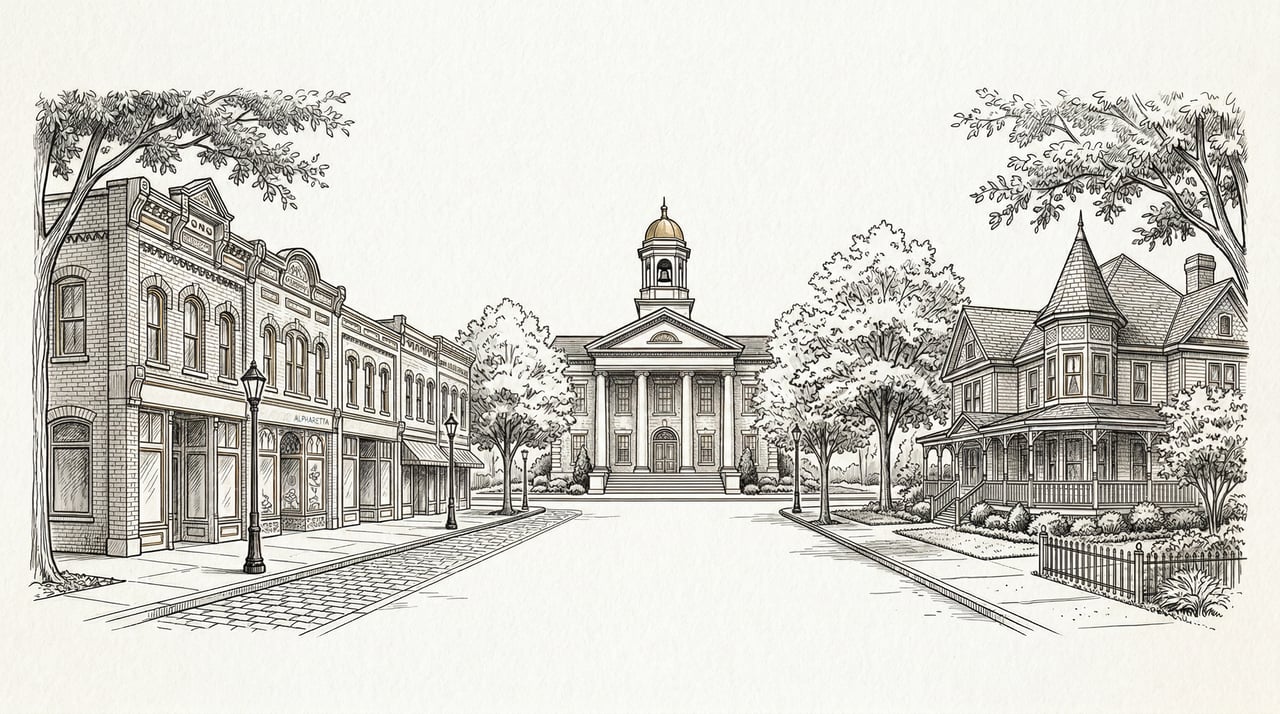
Alpharetta sits in North Fulton County, roughly 25 miles north of downtown Atlanta. It has grown into one of the metro areas most polished suburban cities without losing its sense of place. The tree-lined streets, well-kept neighborhoods, and strong civic investment reflect a community that takes pride in how it presents itself. The downtown has been reimagined around locally owned restaurants, boutiques, and gathering spaces. Nearby, Avalon adds a mixed-use district with shopping, dining, and residences set along walkable, tree-lined streets. More than 200 restaurants call Alpharetta home. The parks system covers over 775 acres. It is a city that rewards staying local and makes it easy to do so.
Alpharettas lifestyle balances polish with accessibility. Weekend mornings might begin at the Big Creek Greenway, a 12-mile paved trail that winds through forested stretches along the creek. The trail connects Alpharetta to Roswell and Forsyth County, making it one of the most valued green corridors in North Fulton. Downtown fills up in the evenings, with sidewalk tables and live music drifting between blocks. Avalon adds a second gathering point with its open-air promenade and seasonal programming. Fitness culture runs strong here. Running groups, cycling clubs, and yoga studios are woven into the weekly routine. The emphasis on outdoor access and walkability shapes how residents spend their time. It is a community that values being active and connected to the outdoors.
Alpharetta was chartered in 1858 along a former Cherokee trail connecting the North Georgia mountains to the Chattahoochee River. One of the earliest landmarks was the New Prospect Camp Ground, a gathering spot and trading post near what is now downtown. Settlers established the area after the Cherokee removal in the 1830s. For much of its history, Alpharetta remained a quiet agricultural community surrounded by farmland and forest. Growth accelerated in the 1980s and 1990s as technology companies established offices along the GA-400 corridor, reshaping the city into a suburban economic hub. The city has preserved its original downtown grid while adding walkable mixed-use districts like Avalon and Alpharetta City Center. That thoughtful layering of old and new gives Alpharetta a sense of depth and continuity that purely planned communities often lack.
Publix and Kroger anchor the grocery routine, with a Whole Foods at Avalon for specialty items. Coffee runs lean toward local spots downtown or cafes along the Avalon promenade. The variety means most errands stay within a short drive or walk. Boutiques, bookstores, and lifestyle shops fill both the downtown strip and the Avalon district. Fitness studios, personal training spaces, and running trails are all within easy reach. Weekend mornings often include a farmers market stop. Alpharetta City Center adds a newer layer of retail and dining, bringing even more reason to keep things close to home. The overall effect is a self-contained city where daily life feels polished but never overproduced.
What is the overall feel of Alpharetta?
Alpharetta feels polished, welcoming, and walkable. It carries the energy of a thriving suburb with the identity of a self-contained city that residents are proud to call home.
What types of homes are common in Alpharetta?
The market includes executive-style homes on landscaped lots, newer townhomes near downtown, and luxury residences within mixed-use developments like Avalon. Architectural styles range from traditional brick to modern farmhouse.
What makes Alpharetta appealing as a lifestyle choice?
The depth of dining options, the quality of parks and trails, and the convenience of mixed-use districts create a daily experience that rarely requires leaving the city. The sense of community adds to its draw.
What does a typical day look like in Alpharetta?
A morning run on the Greenway, coffee at a downtown cafe, and dinner at one of over 200 restaurants. Weekends bring farmers markets, live music, and time at the park with family.
Is Alpharetta a good place for long-term homeownership?
Strong infrastructure investment, a diversified local economy anchored by the technology sector, and consistent demand make Alpharetta one of the most stable communities in the metro area.
195,832 people live in Alpharetta, where the median age is 41.2 and the average individual income is $71,321.593. Data provided by the U.S. Census Bureau.
Total Population
Median Age
Population Density Population Density This is the number of people per square mile in a neighborhood.
Average individual Income
There's plenty to do around Alpharetta, including shopping, dining, nightlife, parks, and more. Data provided by Walk Score and Yelp.
Explore popular things to do in the area, including Cork and Glass, Rise & Wine, and Southern Steer Butcher.
| Name | Category | Distance | Reviews |
Ratings by
Yelp
|
|---|---|---|---|---|
| Dining | 3.2 miles | 11 reviews | 5/5 stars | |
| Dining | 3.09 miles | 5 reviews | 5/5 stars | |
| Dining | 4.05 miles | 5 reviews | 5/5 stars | |
| Dining | 3.05 miles | 12 reviews | 5/5 stars | |
| Active | 0.94 miles | 14 reviews | 5/5 stars | |
| Active | 0.46 miles | 5 reviews | 5/5 stars | |
| Active | 3.88 miles | 11 reviews | 5/5 stars | |
| Beauty | 3.43 miles | 6 reviews | 5/5 stars | |
| Beauty | 4.97 miles | 5 reviews | 5/5 stars | |
| Beauty | 2.36 miles | 11 reviews | 5/5 stars | |
| Beauty | 2.29 miles | 5 reviews | 5/5 stars | |
| Beauty | 2.12 miles | 5 reviews | 5/5 stars | |
| Beauty | 4.97 miles | 6 reviews | 5/5 stars | |
| Beauty | 3.38 miles | 11 reviews | 5/5 stars | |
| Beauty | 1.52 miles | 9 reviews | 5/5 stars | |
| Beauty | 1.12 miles | 8 reviews | 5/5 stars | |
| Beauty | 4.97 miles | 5 reviews | 5/5 stars | |
| Beauty | 1.13 miles | 8 reviews | 5/5 stars | |
| Beauty | 0.52 miles | 5 reviews | 5/5 stars | |
| Beauty | 4.13 miles | 6 reviews | 5/5 stars | |
| Beauty | 2.54 miles | 5 reviews | 5/5 stars | |
| Beauty | 4.05 miles | 6 reviews | 5/5 stars | |
| Beauty | 2.54 miles | 5 reviews | 5/5 stars | |
| Beauty | 2.23 miles | 15 reviews | 5/5 stars | |
|
|
||||
|
|
||||
|
|
||||
|
|
||||
|
|
||||
|
|
Alpharetta has 71,318 households, with an average household size of 10.82. Data provided by the U.S. Census Bureau. Here’s what the people living in Alpharetta do for work — and how long it takes them to get there. Data provided by the U.S. Census Bureau. 195,832 people call Alpharetta home. The population density is 2,132.413 and the largest age group is Data provided by the U.S. Census Bureau.
Total Population
Population Density Population Density This is the number of people per square mile in a neighborhood.
Median Age
Men vs Women
Population by Age Group
0-9 Years
10-17 Years
18-24 Years
25-64 Years
65-74 Years
75+ Years
Education Level
Total Households
Average Household Size
Average individual Income
Households with Children
With Children:
Without Children:
Marital Status
Blue vs White Collar Workers
Blue Collar:
White Collar:
Our exceptional team of local real estate agents and network of consultants are ready to help you sell or buy a home, or invest in real estate.