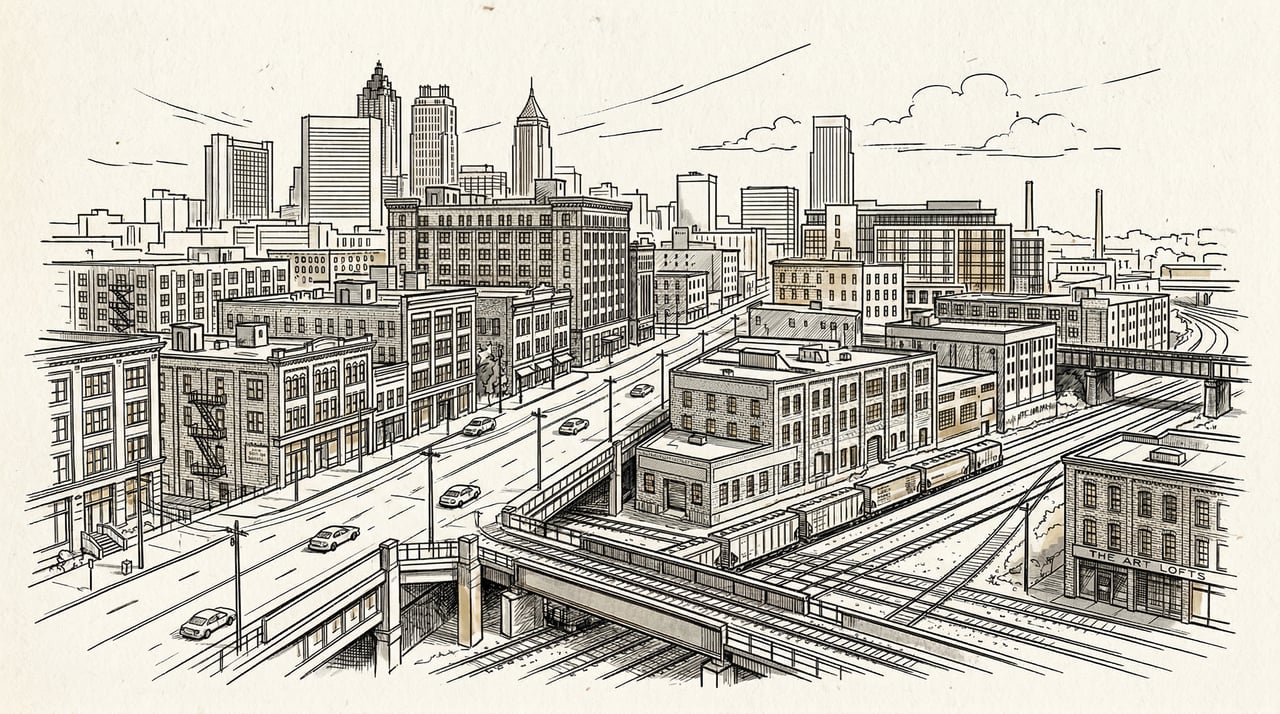
The Marietta Street Artery runs along one of Atlanta’s oldest commercial corridors, connecting the city’s downtown core to the creative energy of West Midtown through a continuous stretch of converted warehouses, adaptive reuse projects, and mixed-use buildings that define its distinctive character.
The corridor draws residents who want to be at the center of Atlanta’s arts, dining, and creative culture, with galleries, studios, and acclaimed restaurants sharing the same walkable streetscape as loft residences and thoughtfully converted industrial spaces.
The architecture here carries real historical weight, with late-nineteenth and early-twentieth century commercial buildings sitting alongside mid-century industrial structures reimagined into some of Atlanta’s most interesting addresses for residents who value the texture of a genuinely urban environment.
Life along the Marietta Street Artery is built around an abundance of cultural access, with galleries, live music venues, chef-driven restaurants, and creative studios concentrated along a walkable corridor that rewards exploration on foot at nearly any hour of the day.
Westside Park’s open meadows and wooded trails provide a natural and generous counterpoint to the urban density of the artery, offering residents a large-format green space for weekend recovery and morning runs just a short distance from the corridor’s most active blocks.
The Westside Beltline Trail connects the artery to a broader network of pedestrian and cycling paths, and the Westside Provisions District anchors a refined retail and dining experience at the northern end of the corridor for those who prefer their lifestyle options curated and convenient.
Marietta Street has been one of Atlanta’s primary commercial arteries since the city’s earliest decades, following a diagonal path that connected the original railroad terminus to the residential and industrial neighborhoods expanding outward to the northwest through the late nineteenth and early twentieth centuries.
The corridor’s brick commercial buildings and warehouse structures, many dating to Atlanta’s post-Civil War industrial growth period, survived successive rounds of urban change and were ultimately recognized as some of the city’s most architecturally significant and adaptively reusable streetscapes.
The late twentieth and early twenty-first centuries brought a sustained period of creative reinvestment, as artists, restaurateurs, and developers recognized the corridor’s potential and began the gradual transformation that has made the Marietta Street Artery one of Atlanta’s most culturally and architecturally compelling urban addresses.
Star Provisions on Howell Mill Road serves as the preferred specialty grocery and provisions stop for many Marietta Street Artery residents, with a selection of artisan cheeses, cured meats, wines, and specialty pantry goods that supports a thoughtful and well-provisioned home kitchen.
The boutiques and independent retailers concentrated within the Westside Provisions District offer an elevated approach to everyday shopping, with design-forward home goods, curated apparel, and specialty finds that reflect the aesthetic sensibility of the broader West Midtown creative community surrounding the artery.
Octane Coffee on Marietta Street NW anchors the morning ritual for corridor residents, and a range of yoga studios, cycling spaces, and boutique fitness offerings along Howell Mill Road round out a wellness routine that fits naturally within the artery’s active and design-conscious daily life.
What is the overall feel of Marietta Street Artery?
The Marietta Street Artery feels like Atlanta at its most genuinely urban, with a corridor energy shaped by decades of creative investment, architectural preservation, and the arrival of some of the city’s most acclaimed restaurants and cultural spaces. It draws residents who want to be embedded in the city’s creative life rather than adjacent to it, and who find real value in the textured, historically layered character of the streetscape.
What home styles are most common here?
Residential options along the Marietta Street Artery tend toward loft-style units and condominiums within adaptively reused industrial and commercial buildings, with exposed brick, high ceilings, and large windows that reflect the corridor’s warehouse heritage. Purpose-built residential projects have also added contemporary construction to the mix, offering a range of finishes and floor plans suited to buyers who prioritize design and urban connectivity.
What makes Marietta Street Artery appealing for lifestyle buyers?
The concentration of acclaimed dining, arts programming, gallery spaces, and creative studios within a walkable corridor makes the Marietta Street Artery a compelling address for buyers whose lifestyle is built around cultural access and urban engagement. The corridor’s walkability, combined with proximity to Westside Park and the Beltline trail system, gives residents a more complete urban experience than almost any other Atlanta address can offer.
What does a typical day look like in Marietta Street Artery?
A morning begins with coffee at Octane on Marietta Street, followed by a walk or run on the Westside Beltline Trail before the broader city comes fully awake. Evenings offer a range of dining options within walking distance, and weekends in the corridor tend to involve gallery visits, a long dinner at Miller Union or The Optimist, and the kind of spontaneous discovery that a well-considered urban address makes possible.
Is Marietta Street Artery a strong long-term ownership or investment choice?
The Marietta Street Artery sits at the intersection of several of Atlanta’s most durable growth stories, including the continued expansion of the Beltline, the maturation of West Midtown’s creative economy, and the ongoing reinvestment in the city’s urban core. Buyers who acquire along the corridor are positioned within a stretch of Atlanta that has demonstrated sustained demand among a culturally engaged and economically active population, making it a thoughtful long-term ownership choice.