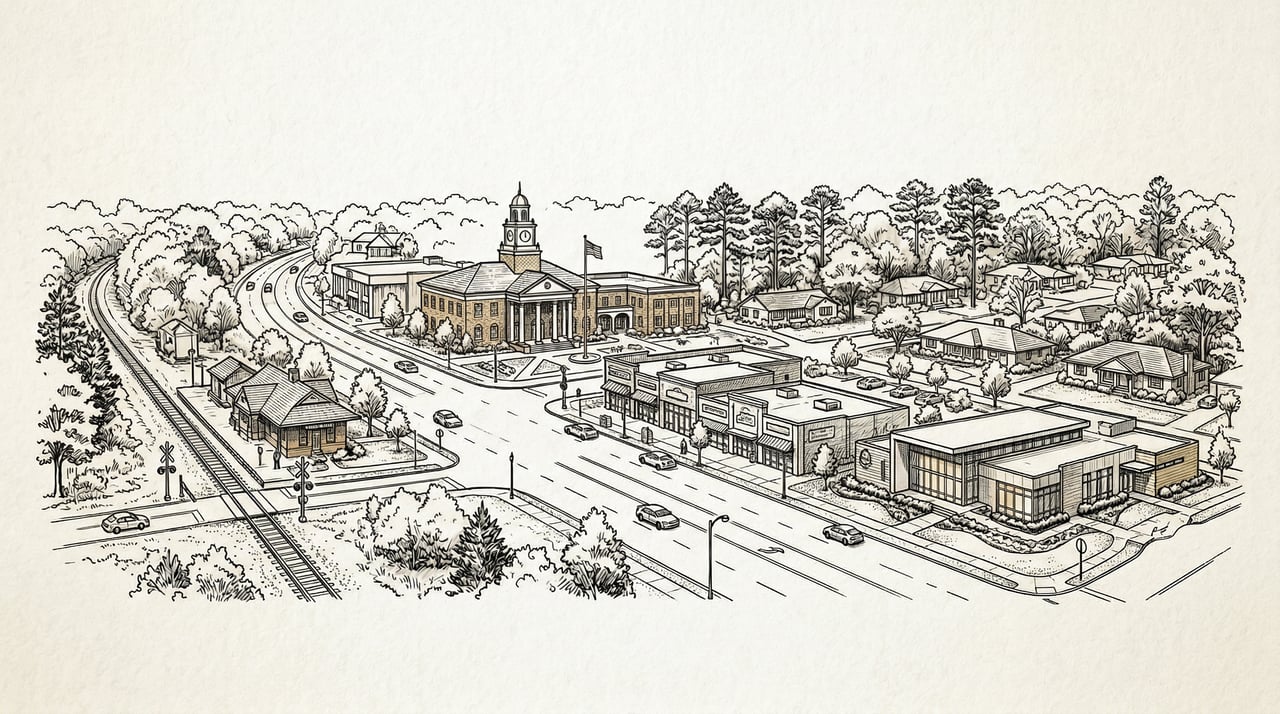
Riverdale sits in the northern tier of Clayton County, its residential neighborhoods anchored by well-established streets and a sense of community identity that has accumulated over decades of owner-occupied development.
The city is compact and navigable, with most daily needs accessible along Highway 85 and Tara Boulevard, and its residential blocks carry the character of a place where neighbors have stayed long enough to know each other by name.
For buyers entering the Clayton County market, Riverdale offers an accessible price point alongside a genuine neighborhood atmosphere — an increasingly rare combination in a metro area where community character has often been traded away for rapid new development.
Daily life in Riverdale moves efficiently and without pretense, organized around neighborhood parks, local dining, and the kind of easy familiarity that comes with living in a city where the same faces show up at the same places each week.
The community’s central location within Clayton County makes it a practical base for residents who work throughout the southern arc of metro Atlanta, and the ease of regional access along Highway 85 keeps commutes predictable and manageable.
Riverdale residents tend to invest in their properties and their block, a pattern reflected in the well-maintained yards, organized neighborhood associations, and a general pride of place that sets certain pockets of the city apart from surrounding areas.
Riverdale incorporated in 1908 and built its early identity around the agricultural and small commercial activity that defined Clayton County’s northern communities in the first half of the 20th century.
The city grew steadily through the postwar era as the south Atlanta suburbs expanded, and Highway 85 became a commercial spine that drew retail, service businesses, and residential development from the 1960s onward.
The community’s civic institutions, churches, and established neighborhoods reflect a local history of investment and continuity, and the city has worked in recent decades to reinforce its identity as a residential community with a stable, owner-driven character.
Grocery anchors include the Publix on Highway 85 and a well-stocked Kroger nearby, with several local markets along Tara Boulevard that stock specialty and international ingredients reflecting the community’s diverse culinary tastes.
The retail corridor along Highway 85 supports a mix of locally owned shops and specialty services, and a small cluster of boutiques and gift shops near the Riverdale town center gives the community a more personal shopping option than the major chains that anchor the surrounding area.
Fitness options include locally owned gyms, a martial arts studio, and a small wellness clinic on the eastern edge of the city that offers personal training, massage, and recovery services to a consistent local clientele.
What is the overall feel of Riverdale?
Riverdale has the feel of a working community where people have chosen to stay. It is practical without being anonymous, familiar without being insular, and shaped by the kind of long-term ownership and neighborhood investment that produces a real sense of belonging over time.
What home styles are most common here?
Ranch-style homes and split-level builds from the 1960s through the 1980s dominate the residential landscape, alongside a smaller number of traditional two-story homes in the newer sections to the south. Lots are typically generous, and mature plantings give established blocks a comfortable, settled look.
What makes Riverdale appealing for lifestyle buyers?
Riverdale offers an accessible entry point into an established neighborhood with genuine community identity, a quality that has become increasingly difficult to find in the metro Atlanta market at a reasonable price. Buyers who want a real block, real neighbors, and real roots tend to find it here.
What does a typical day look like in Riverdale?
A morning at the local café, an afternoon run through the neighborhood park, and an evening at one of the community’s well-known local restaurants describes a comfortable Riverdale day. The city rewards residents who prefer a known routine over the novelty of a constantly changing urban landscape.
Is Riverdale a strong long-term ownership or investment choice?
Clayton County’s proximity to major employment corridors and Hartsfield-Jackson International Airport supports steady demand from long-term owner-occupants and investors alike. Riverdale’s established neighborhood character and consistent ownership patterns have historically contributed to stability in property values across market cycles.
61,703 people live in Riverdale, where the median age is 35.2 and the average individual income is $26,767. Data provided by the U.S. Census Bureau.
Total Population
Median Age
Population Density Population Density This is the number of people per square mile in a neighborhood.
Average individual Income
There's plenty to do around Riverdale, including shopping, dining, nightlife, parks, and more. Data provided by Walk Score and Yelp.
Explore popular things to do in the area, including Hot Wings Express, Laurent's Gourmet Shop, and Cafe Hot Wing.
| Name | Category | Distance | Reviews |
Ratings by
Yelp
|
|---|---|---|---|---|
| Dining | 0.37 miles | 0 reviews | 0/5 stars | |
| Dining | 0.56 miles | 0 reviews | 0/5 stars | |
| Dining · $$ | 0.56 miles | 32 reviews | 3.1/5 stars | |
| Dining | 0.7 miles | 1 review | 5/5 stars | |
| Dining | 0.74 miles | 0 reviews | 0/5 stars | |
| Dining | 0.75 miles | 0 reviews | 0/5 stars | |
| Dining | 1.1 miles | 0 reviews | 0/5 stars | |
| Dining | 1.12 miles | 2 reviews | 3/5 stars | |
| Dining | 1.15 miles | 0 reviews | 0/5 stars | |
| Dining | 1.25 miles | 0 reviews | 0/5 stars | |
| Shopping | 1.01 miles | 0 reviews | 0/5 stars | |
| Beauty | 0.39 miles | 3 reviews | 2.3/5 stars | |
| Beauty | 0.39 miles | 0 reviews | 0/5 stars | |
| Beauty | 0.52 miles | 0 reviews | 0/5 stars | |
| Beauty | 0.71 miles | 11 reviews | 1.5/5 stars | |
| Beauty | 0.75 miles | 0 reviews | 0/5 stars | |
| Beauty | 0.92 miles | 0 reviews | 0/5 stars | |
| Beauty | 0.93 miles | 0 reviews | 0/5 stars | |
| Beauty | 1.03 miles | 0 reviews | 0/5 stars | |
| Beauty | 1.03 miles | 0 reviews | 0/5 stars | |
| Beauty | 1.13 miles | 0 reviews | 0/5 stars | |
| Beauty | 1.15 miles | 18 reviews | 1.8/5 stars | |
| Beauty | 1.16 miles | 0 reviews | 0/5 stars | |
| Beauty | 1.17 miles | 0 reviews | 0/5 stars | |
|
|
||||
|
|
||||
|
|
||||
|
|
||||
|
|
||||
|
|
Riverdale has 23,303 households, with an average household size of 2.65. Data provided by the U.S. Census Bureau. Here’s what the people living in Riverdale do for work — and how long it takes them to get there. Data provided by the U.S. Census Bureau. 61,703 people call Riverdale home. The population density is 3,022 and the largest age group is Data provided by the U.S. Census Bureau.
Total Population
Population Density Population Density This is the number of people per square mile in a neighborhood.
Median Age
Men vs Women
Population by Age Group
0-9 Years
10-17 Years
18-24 Years
25-64 Years
65-74 Years
75+ Years
Education Level
Total Households
Average Household Size
Average individual Income
Households with Children
With Children:
Without Children:
Marital Status
Blue vs White Collar Workers
Blue Collar:
White Collar: