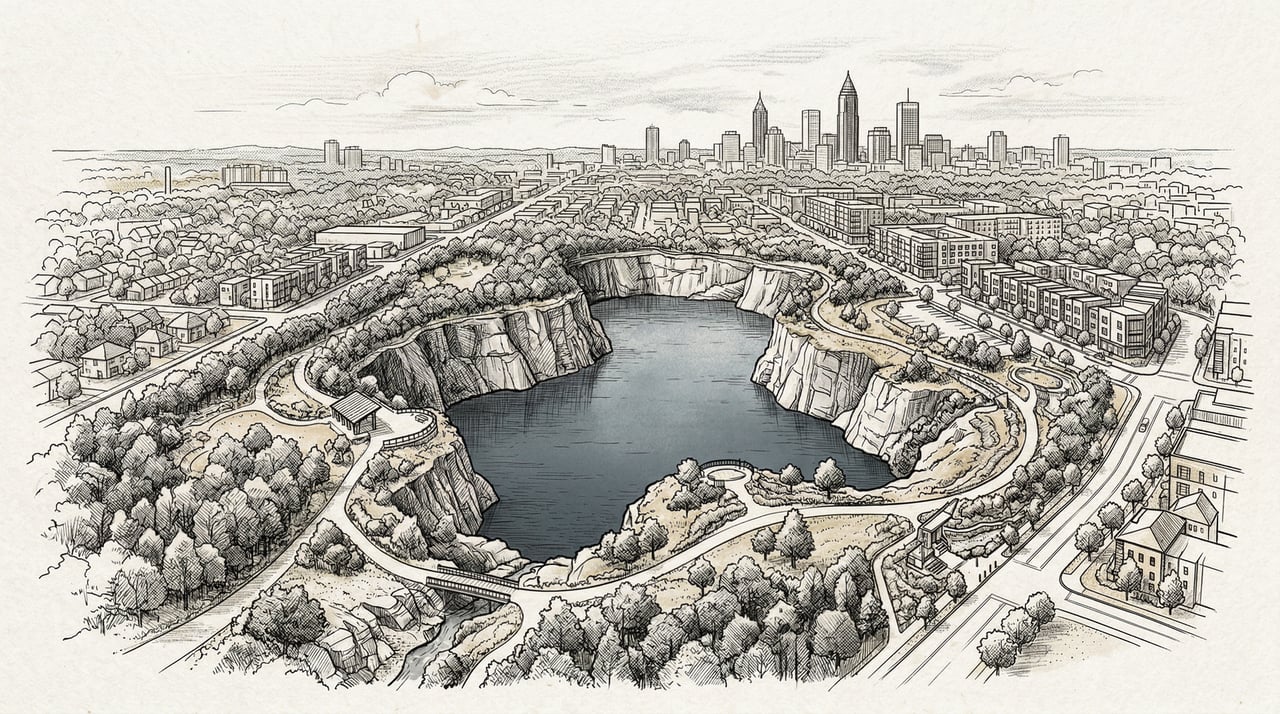
The Westside Park Area draws its identity from one of the largest municipal parks in the Southeast, a sprawling 280-acre greenspace that anchors this west Atlanta neighborhood and shapes daily life along its perimeter streets.
Craftsman bungalows and mid-century ranch homes occupy the residential blocks running off Donald Lee Hollowell Parkway, forming a quiet, tree-shaded streetscape that has sustained a loyal community of long-term owners and returning buyers over many decades.
The BeltLine Westside Trail cuts through the neighborhood, giving residents on-foot and bicycle access to the broader energy of West Midtown and the city’s expanding network of parks, paths, and destinations.
New development has arrived steadily along the Hollowell corridor, adding a layer of civic investment to an area that was already held in high regard by those who took the time to know it well.
Life in the Westside Park Area moves at a rhythm set largely by the park itself, where forested paths fill with walkers, cyclists, and families at all hours of the day and across every season.
Evenings on the residential blocks tend toward the quiet and considered, with wide front porches and mature tree canopies creating a sense of neighborhood that newer developments in other parts of Atlanta find difficult to replicate.
The BeltLine Westside Trail connects the neighborhood to coffee shops, restaurants, and gathering spaces in West Midtown within a short ride, making a Saturday errand loop both practical and genuinely enjoyable.
Residents who appreciate the outdoors and value direct access to the city’s best greenspace without leaving their own neighborhood find few places in Atlanta that offer this particular combination with such consistency.
The western neighborhoods of Atlanta began taking shape in earnest during the late nineteenth and early twentieth centuries, as the city’s growth followed major road corridors including what was then known as Bankhead Highway.
Modest but well-crafted homes appeared on the platted lots of the area during the 1920s and 1930s, many built in the Craftsman and vernacular styles that remain visible on blocks throughout the neighborhood to this day.
Following World War II, the area developed a strong civic identity built around neighborhood churches, community institutions, and an established pattern of homeownership that persisted across subsequent generations of dedicated residents.
The transformation of the former Bellwood Quarry into Westside Park represented a landmark moment for the area, one that crystallized decades of planning and advocacy into a permanent public asset of citywide significance and lasting value.
Daily provisions are well covered along Howell Mill Road and the broader West Midtown corridor, where natural food markets and specialty grocery options sit within a short drive or easy bicycle ride of the neighborhood’s established residential blocks.
Octane Coffee on West Marietta Street provides a morning anchor for residents making the short ride along the BeltLine, with a serious espresso program and a community-minded space suited to both quick stops and longer work sessions throughout the week.
Boutique retail along the Westside Provisions District draws residents for independent home goods shops and apparel stores that prioritize craft and local ownership, offering a considered shopping environment over the convenience of chain retail and mass-market alternatives.
Fitness studios and wellness providers have proliferated along the corridors connecting the neighborhood to West Midtown, with yoga, Pilates, and high-performance training options that fit a range of daily routines and work well alongside the park’s own trail network.
What is the overall feel of Westside Park Area?
The neighborhood has a calm, residential quality underpinned by an unusual abundance of greenspace and a community of residents who take genuine pride in their corner of the city. It feels purposeful and unhurried in a way that sets it apart from the higher-intensity districts closer to Atlanta’s center.
What home styles are most common here?
Craftsman bungalows and mid-century ranch homes predominate, with a mix of vernacular wood-frame construction and brick cottages on the older residential blocks. New construction has added contemporary infill homes in recent years, creating a streetscape where architectural periods coexist with relative ease and mutual respect.
What makes Westside Park Area appealing for lifestyle buyers?
The combination of a 280-acre park directly accessible from residential streets, proximity to West Midtown’s dining and retail scene, and a quiet neighborhood character makes this area attractive to buyers who want a full urban life without sacrificing peace, scale, or access to meaningful open land.
What does a typical day look like in Westside Park Area?
A morning trail run through Westside Park, a coffee stop near the BeltLine, and an afternoon of neighborhood errands along Hollowell Parkway compose a day many residents describe as unhurried and genuinely enjoyable. Evenings often end on the front porch or at a nearby West Midtown restaurant within easy reach by bicycle.
Is Westside Park Area a strong long-term ownership or investment choice?
The 280-acre park, direct BeltLine connectivity, and sustained corridor investment create a foundation for long-term appreciation that few Atlanta neighborhoods can replicate with the same combination of natural and civic assets. Buyers who have committed to this part of the city have found that patience rewards careful ownership in consistent and meaningful ways.