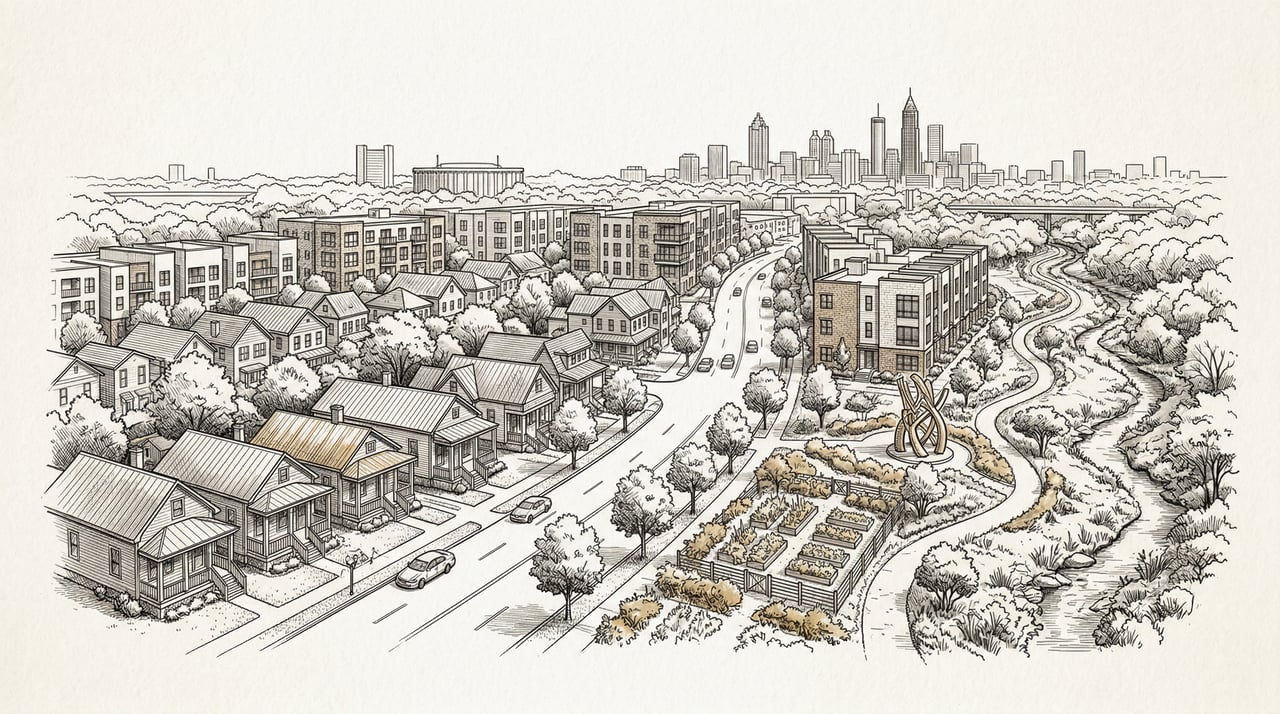
Bankhead Westside runs along one of Atlanta’s oldest and most storied corridors, the historic Bankhead Highway, which carried the first cross-country automobile travelers through the heart of west Atlanta and connected the city to the wider South.
The residential streets branching off this corridor carry a mix of Victorian cottages, Craftsman bungalows, and early twentieth-century vernacular homes set on generous lots with mature shade trees lining the sidewalks in both directions.
Proximity to West Midtown to the east and Westside Park to the north gives residents a layered set of options for daily life, outdoor activity, and dining that requires very little travel time in any direction.
A growing number of buyers have found this part of the city’s west side rewarding for its architectural character, its established civic institutions, and the genuine warmth of residential blocks that have held together with admirable care across generations.
The pace of daily life in Bankhead Westside follows the rhythms of a neighborhood where porch culture is still actively practiced and neighbors tend to know each other by name and by the habits of shared sidewalks.
The BeltLine Westside Trail connects the area to a broader system of parks and paths, making recreational access a defining feature of the lifestyle rather than a weekend-only consideration for those with extra time and motivation.
Restaurants and coffee shops in adjacent West Midtown remain the primary dining draw, accessible within minutes along Hollowell Parkway or by bicycle along the trail with no particular effort or planning required.
On Saturday mornings, the neighborhood moves with a particular ease, the combination of good weather, canopied streets, and a general absence of through traffic making outdoor life feel both natural and quietly uninterrupted from start to finish.
The Bankhead Highway, named for U.S. Senator John H. Bankhead of Alabama, was designated in 1916 as one of the first named transcontinental auto routes in the United States, passing directly through Atlanta’s west side.
The residential neighborhoods that developed along this corridor from the 1910s through the 1940s drew families seeking new construction on the western edge of a rapidly growing city with expanding ambitions and a confident civic spirit.
Victorian-era and Craftsman-period homes were built on streets set back from the main corridor, forming quiet residential blocks that retained their character and architectural integrity across the middle decades of the twentieth century with notable consistency.
The renaming of the highway to Donald Lee Hollowell Parkway in 2000, honoring Atlanta’s legendary civil rights attorney, added a new layer of civic meaning to a corridor already carrying significant weight in the story of Atlanta’s development.
Grocery needs are well covered by the markets and specialty food stores along Howell Mill Road and the broader West Midtown corridor, both easily reached by short drive or accessible bicycle ride from the neighborhood’s established residential blocks.
Octane Coffee on West Marietta Street provides a nearby anchor for morning routines, with a consistent espresso program and a community-minded space that doubles as a midday destination for remote workers and neighbors throughout the week.
Independent boutiques and home goods shops in the Westside Provisions District offer a retail experience centered on craft and local ownership, appealing to residents who prefer a considered shopping environment over the scale and anonymity of conventional retail options.
Fitness studios in the West Midtown area, including yoga and cycling options well regarded across the city, bring a strong wellness culture within easy reach of Bankhead Westside residents looking to anchor daily and weekly routines around movement and health.
What is the overall feel of Bankhead Westside?
The neighborhood carries a grounded, residential character rooted in its historic architecture and its long civic tradition as one of Atlanta’s established west-side communities. Residents describe it as a place with genuine identity, where the streetscape tells a legible and interesting story of the city’s early growth and continued evolution.
What home styles are most common here?
Victorian cottages, Craftsman bungalows, and early twentieth-century vernacular homes make up the majority of the existing residential stock, set on tree-lined streets with established front yard setbacks and mature plantings. New infill construction has added contemporary options for buyers who prefer modern layouts within a neighborhood of authentic historic character.
What makes Bankhead Westside appealing for lifestyle buyers?
The combination of architectural character, BeltLine trail access, proximity to West Midtown dining and retail, and a community with deep local roots creates an environment that rewards owners who appreciate authentic urban living over the uniformity of new-build neighborhoods built to a single modern standard.
What does a typical day look like in Bankhead Westside?
A morning walk along a tree-lined residential block, a coffee stop in West Midtown, and an evening dinner within the Westside Provisions District describes a day that many residents organize with ease and deliberate intention. The neighborhood’s layout makes this kind of routine feel natural rather than effortful or particularly planned in advance.
Is Bankhead Westside a strong long-term ownership or investment choice?
The neighborhood’s historic architecture, BeltLine connectivity, and position within the broader west Atlanta growth corridor provide a durable foundation for long-term ownership and patient appreciation. Buyers drawn to neighborhoods with authentic character and established civic bones have found that this part of the city rewards conviction and careful selection over time.