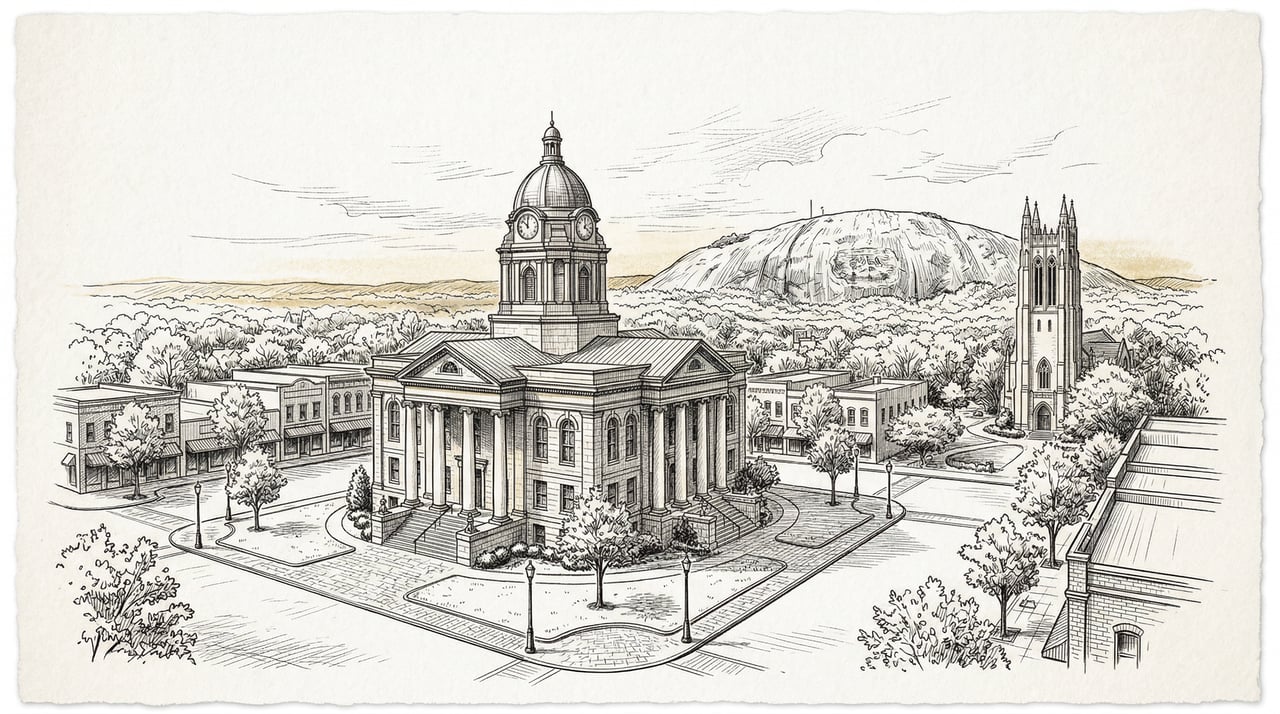
DeKalb County stretches east and northeast of Atlanta, taking in the walkable town center of Decatur, the polished residential corridors of Brookhaven and Dunwoody, and the wooded neighborhoods of Tucker and Stone Mountain.
The county rewards buyers who appreciate variety, from bungalow-lined streets where front porches face quiet sidewalks to expansive private estates on forested lots with long private drives and established privacy landscaping.
Mornings in Decatur carry the rhythm of a true pedestrian neighborhood, with independent coffee shops, bookstores, and shaded sidewalks creating a daily texture that feels more like a small city than a suburb of a major metro.
Farther east, the landscape opens into quieter residential stretches where generous lots and mature hardwood canopies offer a sense of seclusion that the county’s city-adjacent neighborhoods do not seek to replicate.
DeKalb County’s lifestyle is defined by its walkable town centers, a celebrated and deeply independent restaurant culture, and a community investment in arts, local retail, and outdoor recreation that distinguishes the county from its neighbors.
Decatur’s independent dining and coffee scene draws visitors from across the metro, while the county’s network of parks and greenway trails provides outdoor escapes within minutes of even the most urban residential pockets.
Brookhaven’s Dresden Drive corridor offers upscale dining, boutique fitness studios, and a weekend farmers market that anchors the neighborhood’s social life and draws loyal regulars from the surrounding residential streets.
For buyers who want city-caliber cultural access alongside genuine residential quiet, DeKalb County offers a combination that is difficult to replicate anywhere else in the greater Atlanta region.
DeKalb County was established in 1822 and named for Baron Johann de Kalb, a Prussian-born officer who served with distinction as a general in the Continental Army during the American Revolution.
The county seat of Decatur was founded in 1823 and grew into a distinguished civic and educational center, anchored by Agnes Scott College, whose Gothic Revival buildings remain among the most beautiful campus structures in the American South.
The Druid Hills neighborhood, developed in the early 20th century from plans by Frederick Law Olmsted, set a lasting standard for gracious residential planning and established a landscape tradition that continues to define the county’s most sought-after addresses.
In the mid-20th century, communities like Brookhaven and Dunwoody emerged as models of thoughtfully planned suburban living, with parkways, wooded lots, and civic infrastructure that have aged with remarkable grace and continued desirability.
Whole Foods Market on Commerce Drive anchors the Decatur grocery landscape, complemented by independent specialty provisions along the Decatur Square and the well-curated food shops tucked throughout West Ponce de Leon Avenue.
Boutique retail along West Ponce de Leon Avenue and Dresden Drive includes locally owned clothing, home goods, and gift shops that reward regular visits and support the merchants who give each corridor its own distinct personality and pace.
For wellness, Exhale Spa and a strong collection of independently owned yoga studios and fitness boutiques throughout Decatur and Brookhaven serve residents who treat recovery, movement, and personal care as essential parts of daily life.
What is the overall feel of DeKalb County?
DeKalb carries an intellectual, community-minded energy, particularly in Decatur and the Druid Hills corridor, where walkable streets and a strong local identity create a distinctly livable and engaged atmosphere. Farther from the urban core, neighborhoods like Dunwoody and Tucker offer a quieter residential pace without sacrificing the county’s cultural and culinary strengths.
What home styles are most common here?
DeKalb’s older neighborhoods are defined by Craftsman bungalows, Tudor Revivals, and Colonial-style homes, many with deep front porches, original hardwood floors, and mature hardwood trees forming a full canopy overhead. Brookhaven and Dunwoody offer well-crafted newer construction and infill townhomes that reflect the established architectural character of the streets surrounding them.
What makes DeKalb County appealing for lifestyle buyers?
The county’s blend of walkable town centers, a celebrated independent restaurant scene, and mature residential neighborhoods creates an environment that supports a rich and curated daily life. Buyers who value community identity, independent retail, and proximity to cultural institutions find DeKalb consistently rewarding across the full arc of ownership and daily experience.
What does a typical day look like in DeKalb County?
A morning in DeKalb might begin with a walk to a Decatur coffee shop, followed by work from a home office or the neighborhood library, then an afternoon trail run at Murphey Candler Park. Evenings often end at one of the county’s acclaimed independent restaurants, with weekends organized around the Decatur Farmers Market and a rotating calendar of local arts programming.
Is DeKalb County a strong long-term ownership or investment choice?
Neighborhoods like Decatur, Brookhaven, and Druid Hills have demonstrated sustained desirability across generations, supported by walkable infrastructure, strong civic investment, and continued private development in commercial corridors. Buyers drawn to the county’s established residential core find properties that hold and build long-term appeal with notable reliability across multiple market cycles.