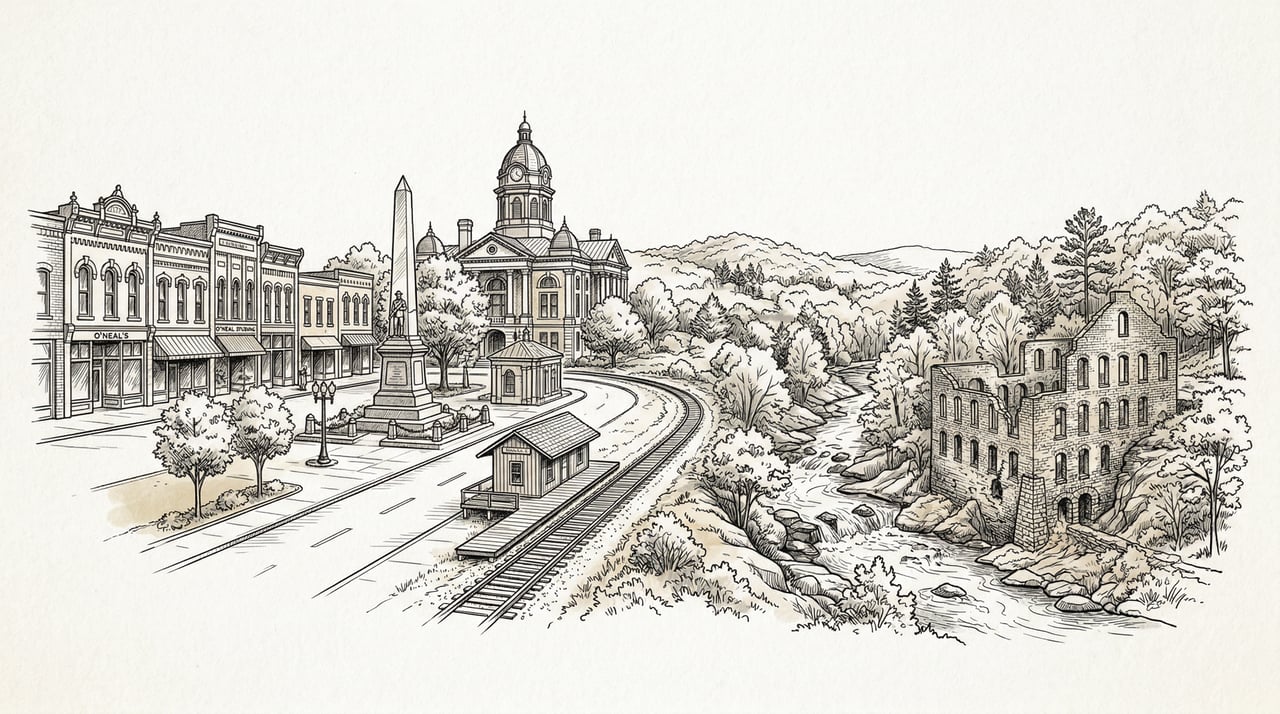
Douglas County lies west of Atlanta, centered around Douglasville and extending into wooded residential corridors where generous lots and natural landscape give buyers a sense of space that the denser inner suburbs cannot easily offer.
Chapel Hill Road and the surrounding neighborhoods are home to established communities where mature trees shade wide streets and homes sit comfortably set back from the road, lending the area a calm and genuinely private character.
The master-planned Tributary community along the Douglas-Paulding border represents the county’s most refined residential expression, with careful streetscaping, architectural standards, and a village center that anchors the neighborhood’s daily rhythm and social life.
Life in Douglas County has a deliberate and unhurried quality that appeals strongly to buyers relocating from denser markets who want genuine access to Atlanta without the surrounding noise or compressed residential footprint.
Douglas County’s lifestyle is shaped most distinctly by Sweetwater Creek State Park, one of the most beautiful and accessible natural areas in the entire Atlanta metropolitan region, sitting just minutes from residential neighborhoods.
Residents tend to integrate the outdoors into daily life with real intention, trail running, kayaking, and weekend hikes along Sweetwater Creek’s ruined mill walls and forested riverside paths forming a regular and meaningful part of the week.
The Chapel Hill corridor supports a growing restaurant and retail scene, with locally owned cafés and boutiques giving Douglasville’s commercial streets a modest but genuine community identity rooted in neighborhood loyalty and repeat patronage.
For buyers seeking a slower pace with meaningful natural access and genuine residential privacy, Douglas County offers a lifestyle calibrated to those who find renewal in landscape, quiet evenings, and a well-spaced sense of place.
Douglas County was created in 1870, carved from Carroll and Campbell counties, and built its early identity around agriculture, small-scale manufacturing, and the railroad connections that linked it to Atlanta’s expanding commercial network.
Douglasville, the county seat, was chartered in 1875 and developed a modest Victorian downtown along Campbellton Street, portions of which have been preserved and now anchor the city’s historic commercial district with genuine architectural character.
Through the latter decades of the 20th century, the county absorbed significant residential growth as Atlanta’s western suburbs expanded outward, and planned communities along Chapel Hill Road established the quality residential character that defines the area.
The arrival of Tributary and similarly planned communities in the early 2000s introduced a new level of architectural and landscape ambition to Douglas County, setting a visible standard for residential quality in Atlanta’s western corridor.
Publix and Kroger locations along the Chapel Hill Road corridor anchor the county’s everyday grocery landscape, with The Fresh Market accessible in nearby Smyrna for buyers who prefer a more curated specialty shopping experience.
The Tributary village center and Chapel Hill Crossing support a growing collection of locally owned retail and home goods shops, giving residents access to a boutique shopping experience without traveling far from the county’s western residential communities.
For fitness and wellness, independently operated yoga studios and dedicated training centers in the Chapel Hill area serve a clientele that takes personal health seriously, with a broader range of wellness options accessible in neighboring Cobb County within a comfortable drive.
What is the overall feel of Douglas County?
Douglas County has a calm, private, and landscape-forward quality that sets it apart from more densely developed parts of metro Atlanta. The residential streets feel spacious and unhurried, and the presence of Sweetwater Creek State Park gives the entire county a natural anchor that shapes daily life with genuine meaning and regularity.
What home styles are most common here?
The county’s residential landscape is largely defined by Craftsman-influenced traditional homes and colonial-style builds set on generous lots, many with wooded backyards and established privacy landscaping that deepens over time. The Tributary community introduces a more cohesive architectural vision, with design standards and streetscaping that give the neighborhood a particularly polished and consistent residential character.
What makes Douglas County appealing for lifestyle buyers?
Immediate access to Sweetwater Creek State Park, generous lot sizes, and a quieter residential pace create a lifestyle that rewards buyers who want to live close to nature without sacrificing metro Atlanta connectivity. For those who measure quality of life in morning trail runs, long evenings on a back porch, and a sense of genuine space, Douglas County delivers with consistency.
What does a typical day look like in Douglas County?
Mornings often begin on one of Sweetwater Creek’s trails before a commute into Atlanta along I-20, which connects the county to the city in roughly 25 to 30 minutes under standard traffic conditions. Evenings tend toward the relaxed, with neighborhood restaurants, home cooking on a screened porch, and the particular quiet of a wooded western Atlanta night settling in early.
Is Douglas County a strong long-term ownership or investment choice?
Douglas County’s combination of accessible pricing relative to closer-in suburbs, generous residential land, and meaningful natural amenities has attracted consistent buyer interest from those seeking quality and space in the western Atlanta corridor. The county’s ongoing residential development and proximity to major employment centers along I-20 support its long-term ownership appeal for thoughtful buyers.