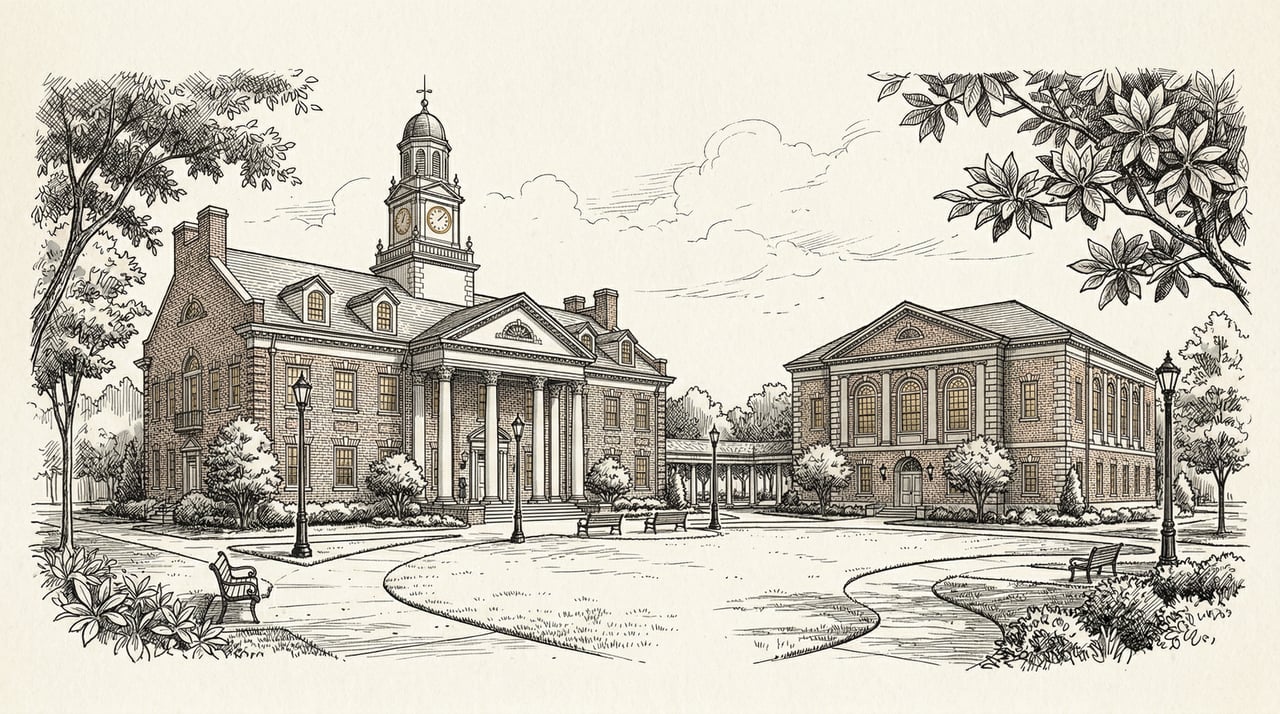
East Point occupies the southwestern edge of Fulton County near Atlanta, one of the region's oldest incorporated cities, with a civic and residential history that stretches to the late nineteenth century.
Main Street serves as the city's historic spine, lined with commercial buildings from the early twentieth century that have seen renewed energy through independent business investment and creative occupancy in recent years.
The residential neighborhoods off Jefferson Avenue and Ware Street carry a domestic architecture that ranges from Victorian cottages to early-century bungalows, a mix that rewards buyers who appreciate genuine character over sameness.
A younger generation of residents has found East Point to be a rare combination of accessible pricing and authentic urban texture, bringing fresh vitality to a city that has always maintained a strong sense of itself.
Life in East Point moves at a pace shaped by its compact geography and long-standing neighborhood bonds, with residents who patronize local businesses and gather at the city's community parks and gathering places with regularity.
The local arts community has helped redefine the city's identity in meaningful ways, with creative studios and gallery spaces taking root in historic storefronts along and near the Main Street corridor.
Residents tend to value the low-key social fabric that distinguishes East Point from more heavily developed neighbors, with a farmers market season and recurring community events that build familiarity over time.
The Camp Creek greenway and South River watershed provide accessible outdoor options that many residents discover only after settling in and beginning to explore the city's quieter edges on foot or by bicycle.
East Point was incorporated in 1887, originally established as a railroad junction where multiple lines converged to make it one of the South's busiest freight and passenger hubs through the late nineteenth and early twentieth centuries.
That railroad heritage shaped the city's early commercial architecture, and the Main Street storefronts that survive from the 1910s through the 1940s reflect the civic ambition of a community that understood its own importance in the regional economy.
The residential neighborhoods that grew outward from the historic core during the 1920s and 1930s produced a legacy of craftsman bungalows and foursquare homes on tree-shaded streets that still define the city's residential character in its older sections.
East Point maintained its independent municipal identity through the broader postwar Atlanta expansion that absorbed many smaller nearby communities, a civic resilience that residents across generations have taken as a point of pride.
Everyday grocery needs in East Point are served by a mix of neighborhood markets and larger stores along the Camp Creek corridor, with access to specialty provisions through shops that have followed the area's broader retail growth.
The Main Street retail district has seen a steady increase in independently owned shops in recent years, including locally curated boutiques and home goods stores that give the corridor a more distinctive character than chain-heavy alternatives.
Fitness and wellness options in East Point have grown alongside the residential base, with neighborhood studios and community recreation facilities providing accessible options for residents who prefer a shorter drive or no drive at all to maintain an active routine.
What is the overall feel of East Point?
East Point has the feel of a city that knows what it is and has never tried to be something else. It is unpretentious and genuine, with a community pride rooted in a long civic history and a sense of place that more recently developed suburbs cannot manufacture.
What home styles are most common here?
Craftsman bungalows, Victorian cottages, and early-twentieth-century foursquare homes define the older residential sections closest to the historic core, with mid-century ranch homes appearing more frequently in the neighborhoods that developed through the 1940s and 1950s.
What makes East Point appealing for lifestyle buyers?
The combination of genuine historic architecture, an evolving local dining and arts scene, and a compact, walkable downtown creates a lifestyle experience that is difficult to find at a comparable price point anywhere else in the Fulton County market.
What does a typical day look like in East Point?
A morning walk through a quiet residential street leads to coffee at a Main Street café, followed by afternoon work at home before an evening out at one of the neighborhood restaurants that have opened in the historic district over the past several years.
Is East Point a strong long-term ownership or investment choice?
East Point's trajectory of neighborhood reinvestment, growing independent business presence, and proximity to major employment centers suggest that long-term ownership positions taken in the current environment are likely to benefit from continued appreciation as the area's identity continues to strengthen.
38,810 people live in East Point, where the median age is 38 and the average individual income is $36,662. Data provided by the U.S. Census Bureau.
Total Population
Median Age
Population Density Population Density This is the number of people per square mile in a neighborhood.
Average individual Income
There's plenty to do around East Point, including shopping, dining, nightlife, parks, and more. Data provided by Walk Score and Yelp.
Explore popular things to do in the area, including Taste In Paradise, Champions at The Rise Schools, and Classic Hair & Nail Studio II.
| Name | Category | Distance | Reviews |
Ratings by
Yelp
|
|---|---|---|---|---|
| Dining | 0.68 miles | 0 reviews | 0/5 stars | |
| Active | 0.52 miles | 0 reviews | 0/5 stars | |
| Beauty | 0.46 miles | 1 review | 1/5 stars | |
| Beauty | 0.51 miles | 0 reviews | 0/5 stars | |
| Beauty | 0.51 miles | 0 reviews | 0/5 stars | |
| Beauty | 0.68 miles | 0 reviews | 0/5 stars | |
| Beauty | 0.68 miles | 0 reviews | 0/5 stars | |
| Beauty | 0.68 miles | 0 reviews | 0/5 stars | |
| Beauty | 0.68 miles | 0 reviews | 0/5 stars | |
| Beauty | 0.68 miles | 0 reviews | 0/5 stars | |
| Beauty | 1.39 miles | 0 reviews | 0/5 stars | |
| Beauty | 1.51 miles | 2 reviews | 3/5 stars | |
| Beauty | 1.52 miles | 0 reviews | 0/5 stars | |
| Beauty | 1.52 miles | 0 reviews | 0/5 stars | |
|
|
||||
|
|
||||
|
|
||||
|
|
||||
|
|
||||
|
|
East Point has 16,662 households, with an average household size of 2. Data provided by the U.S. Census Bureau. Here’s what the people living in East Point do for work — and how long it takes them to get there. Data provided by the U.S. Census Bureau. 38,810 people call East Point home. The population density is 3,865 and the largest age group is Data provided by the U.S. Census Bureau.
Total Population
Population Density Population Density This is the number of people per square mile in a neighborhood.
Median Age
Men vs Women
Population by Age Group
0-9 Years
10-17 Years
18-24 Years
25-64 Years
65-74 Years
75+ Years
Education Level
Total Households
Average Household Size
Average individual Income
Households with Children
With Children:
Without Children:
Marital Status
Blue vs White Collar Workers
Blue Collar:
White Collar: