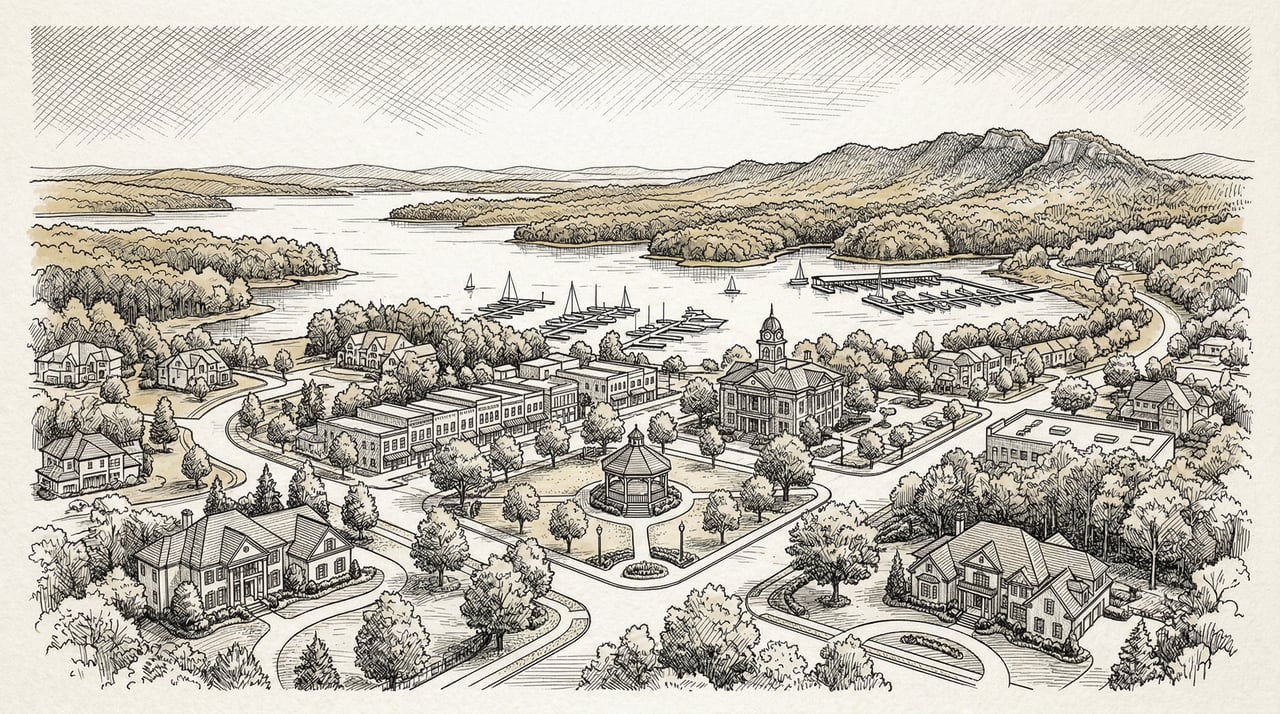
Forsyth County occupies the northern arc of Metro Atlanta, where wooded subdivisions, ridge-top estates, and the wide surface of Lake Sidney Lanier define a residential landscape unlike any other in the region.
The county seat, Cumming, anchors a growing network of master-planned communities and village-scale retail corridors that have transformed former farmland into one of the MSA's most sought-after addresses over the past two decades.
Neighborhoods along GA-400 connect residents to Alpharetta's technology corridor and Atlanta's urban core within 45 minutes, while Bethelview Road and Kelly Mill Road lead into quieter reaches where estate lots and horse properties still set the residential tone.
That balance of access and ease defines Forsyth's appeal — a county where mornings feel genuinely quiet and the commute, when it comes, feels like a deliberate choice rather than an obligation.
Lake Lanier defines leisure in Forsyth County the way few natural features define a suburban landscape — as a year-round destination for boating, paddling, lakefront dining, and the simple pleasure of open water within ten minutes of home.
The Big Creek Greenway, a paved multi-use trail threading through natural corridors near the Little Chattahoochee River, draws cyclists and runners from across the county and connects neighborhoods north of Alpharetta to Forsyth's southern residential edge.
Golf courses, equestrian properties, and the wine country just north along GA-9 round out a lifestyle that prizes quiet comfort and ease, giving weekends a rhythm that feels considered and unhurried rather than scheduled and driven.
Weekend farmers markets along Market Street in Cumming draw residents out in the early morning hours, when the light is still low and the air carries the scent of seasonal produce and freshly roasted coffee.
Forsyth County was created in 1832 from Cherokee-ceded territory and named for John Forsyth, a Georgia governor and U.S. Secretary of State who served with distinction under Presidents Jackson and Van Buren.
Through the 19th century, the county developed as a farming community, its red clay fields supporting cotton cultivation and the modest commercial grid that grew into the town of Cumming along a straightforward street plan that still anchors the historic core.
The creation of Buford Dam and the formation of Lake Sidney Lanier in the 1950s transformed the county's northern landscape, attracting recreational investment and eventually the residential growth that has defined Forsyth's identity for generations since.
The county's architectural range reflects its layered history, from late-20th-century traditional subdivisions in the south to newer craftsman and transitional designs further north, where brick facades and maturing street trees lend permanence to communities still finding their footing.
Whole Foods Market at the Cumming City Center anchors the county's premium grocery landscape, while Land of a Thousand Hills Coffee on Market Street draws a loyal morning clientele with its ethically sourced single-origin roasts and relaxed indoor-outdoor seating.
Vickery Village offers a walkable retail cluster of boutiques and locally owned shops, where residents browse independent home goods, apparel, and specialty stores in a setting designed for unhurried weekend discovery rather than transactional errands.
Pure Barre and Orangetheory Fitness locations in the Cumming City Center and Vickery Village corridors give residents access to structured, studio-quality fitness programs within a short drive of nearly every Forsyth residential address.
What is the overall feel of Forsyth County?
Forsyth County feels spacious and well-ordered, a northern suburb where lake access and tree-covered ridgelines define the residential backdrop and neighborhood life moves at a pace that residents consistently describe as deliberate and grounding. Communities range from established traditional subdivisions to newer master-planned neighborhoods, all sharing a consistent sense of care, finish, and long-term investment.
What home styles are most common here?
Ranch homes and traditional colonial styles from the 1980s and 90s fill the county's established neighborhoods, while newer master-planned communities favor craftsman, transitional, and open-concept designs on larger lots than comparable properties found closer to the perimeter. Many newer homes feature three-car garages, dedicated outdoor living areas, and finishes calibrated to a buyer who expects quality alongside space.
What makes Forsyth County appealing for lifestyle buyers?
Lake Lanier access, the Big Creek Greenway, and a growing village retail scene in Cumming and Vickery Village create a lifestyle built around outdoor ease and local comfort that few northern suburbs can replicate. The proximity to Alpharetta's employment corridor adds practical value for buyers balancing professional commitments with a genuine preference for residential quality.
What does a typical day look like in Forsyth County?
A Forsyth County morning often begins with a walk on the Big Creek Greenway or coffee on Market Street in Cumming, where regulars occupy the same tables with the ease of a community that knows itself well. Afternoons frequently shift to the lake, a round of golf, or the wine country just north on GA-9, and evenings settle into the county's growing collection of independent restaurants and neighborhood dining rooms.
Is Forsyth County a strong long-term ownership or investment choice?
Forsyth County's sustained population growth, strong infrastructure investment, and direct proximity to Alpharetta's technology and business corridor have supported consistent residential demand across its neighborhoods for more than two decades. Buyers who establish ownership here tend to remain for the long term, drawn by a community character that rewards commitment and a setting that continues to appreciate in amenity and identity.