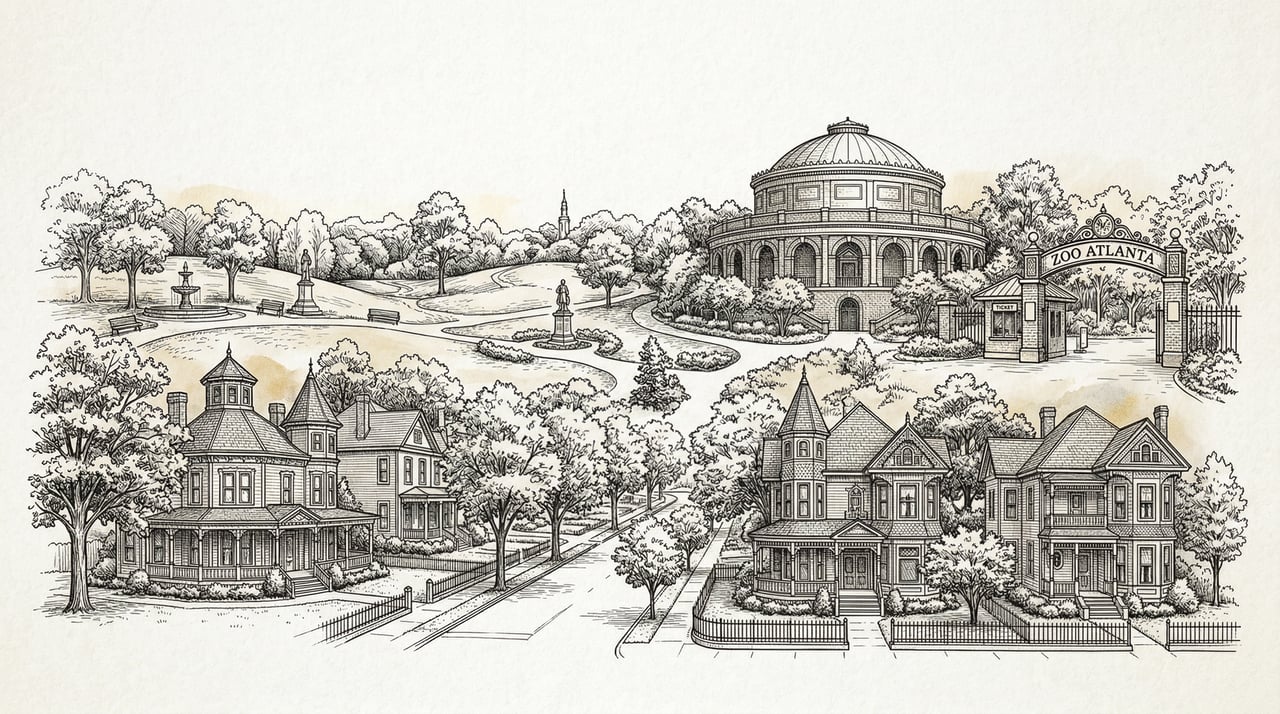
Grant Park is one of Atlanta’s oldest intact residential neighborhoods, a community built in the 1880s around the park that gave it its name and sustained by generations of residents who chose preservation over displacement.
The streets here are dense with Queen Anne cottages and Craftsman bungalows, most of them carefully restored, their front porches and generous setbacks giving the neighborhood a warmth and human scale that newer development rarely achieves.
Zoo Atlanta and Oakland Cemetery anchor the neighborhood’s southeastern edge, adding a rare civic dimension to daily life. Residents can walk to one of the country’s most respected urban zoos or spend a long afternoon among the monuments and gardens of Atlanta’s most significant historic burial ground.
The BeltLine’s connectivity draws buyers who want walkable access to the broader Eastside network, with the trail providing a direct link from Grant Park into the parks, markets, and gathering places that define this part of the city.
Life in Grant Park moves at the pace of a neighborhood that has always taken its public spaces seriously. The park itself, spanning more than 130 acres along Cherokee Avenue, provides a setting for morning walks, Saturday picnics, and seasonal gatherings attended by residents who live just blocks away.
Oakland Cemetery adds a contemplative dimension to the neighborhood’s identity, drawing walkers and history enthusiasts to its beautifully maintained grounds and offering a quiet alternative to the energy of the surrounding city on any given afternoon.
The restaurant and cafe scene along Memorial Drive and Glenwood Avenue has matured considerably in recent years, giving Grant Park residents a walkable dining corridor suited to everything from a weekday coffee to a long Saturday supper with friends.
The neighborhood’s active community association and regular park programming keep residents connected, reinforcing the sense that Grant Park is not simply an address but a genuine community with shared investment in its streets and green spaces.
Grant Park takes its name from Lemuel P. Grant, a civil engineer and Atlanta civic figure who donated the original land for the park to the city in 1883, making it Atlanta’s first public park and the anchor for the residential neighborhood that followed.
The surrounding community developed rapidly through the 1880s and 1890s as streetcar lines extended south from downtown and middle-class families built modest Victorian homes along shaded streets within walking distance of the new park.
By the early twentieth century, Grant Park was one of Atlanta’s most established working neighborhoods, its Craftsman bungalows and Folk Victorian cottages representing the domestic aspirations of a generation of Atlantans who chose to live close to the city’s green heart.
Resident-led preservation efforts beginning in the late 1960s restored the neighborhood block by block, culminating in Grant Park’s placement on the National Register of Historic Places and establishing it as one of Atlanta’s most recognized and studied historic districts.
Grant Park residents draw their daily provisions from a mix of neighborhood anchors, with specialty shops and local vendors along Cherokee Avenue providing a walkable alternative to larger destinations, and Little Tart Bakeshop standing as the neighborhood’s most cherished morning stop for coffee and a pastry before the day begins.
The stretch of Glenwood Avenue and the Memorial Drive corridor hosts an evolving mix of locally owned retail and boutique shops, giving the neighborhood a commercial identity that reflects the independent spirit of its residents rather than the predictable offerings of a larger retail district.
Fitness and wellness in Grant Park centers on the outdoor resources that define it. Residents build routines around morning runs through the park’s trail system, BeltLine rides, and a growing collection of studio fitness offerings that have arrived alongside the neighborhood’s increased density and sustained demand.
What is the overall feel of Grant Park?
Grant Park has a grounded, historically rich character that sets it apart from newer Atlanta neighborhoods. It is a place where front-porch culture is real, neighbors know one another’s names, and the presence of one of the city’s great public parks shapes the pace of daily life in a way that residents find genuinely rare and irreplaceable.
What home styles are most common here?
Queen Anne cottages, Folk Victorian homes, and Craftsman bungalows define the neighborhood’s residential fabric, most of them on lots that reflect the original 1880s and 1890s platting. Many have been meticulously restored by long-term owners, with generous porches, period detailing, and private gardens that give the blocks a strong and consistent architectural identity.
What makes Grant Park appealing for lifestyle buyers?
The combination of a large, beautiful park steps from home, a walkable dining and cafe scene, and a deeply established sense of neighborhood community is difficult to replicate elsewhere in Atlanta. Buyers who value outdoor access, architectural character, and a residential experience rooted in civic investment find Grant Park consistently delivers on all three.
What does a typical day look like in Grant Park?
Mornings in Grant Park often begin with a walk through the park or a stop at Little Tart Bakeshop before the day begins. Evenings bring residents back outside, whether for dinner at the Wrecking Bar, a quiet loop through Oakland Cemetery at dusk, or a relaxed hour on the front porch watching the street settle into the evening.
Is Grant Park a strong long-term ownership or investment choice?
Grant Park’s position as a National Register historic district, combined with its BeltLine connectivity and walkable dining scene, has made it a consistent draw for buyers seeking an authentic Atlanta neighborhood with depth and long-term staying power. Long-term ownership rates are high, and the community’s active preservation ethic helps sustain the conditions that make the neighborhood enduringly desirable.