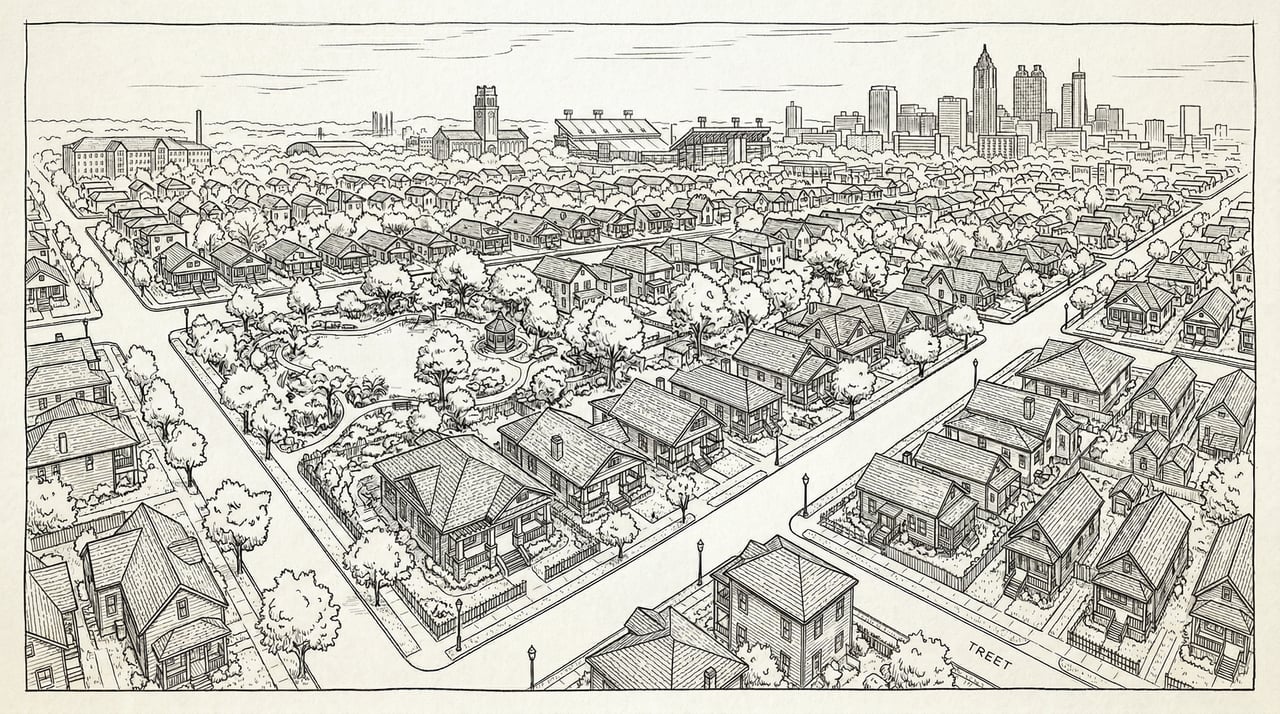
Home Park is one of Midtown Atlanta’s most intimate residential enclaves, a neighborhood of craftsman bungalows and foursquare homes set along streets shaded by mature oaks and crepe myrtles.
The neighborhood occupies a quiet pocket between Georgia Tech’s eastern edge and the Northside Drive corridor, offering residents a genuine village feel within one of Atlanta’s most connected urban districts.
Mornings along Fowler Street or Hemphill Avenue reveal front porches, trimmed hedges, and the particular stillness of a neighborhood that has always valued its residential identity over rapid redevelopment.
The housing stock spans the early twentieth century, with original bungalows sitting beside carefully renovated foursquares and the occasional newer infill townhome that has absorbed the neighborhood’s craftsman sensibility and quiet scale.
Home Park’s lifestyle draws naturally from its surroundings, with residents walking or cycling to the Fox Theatre, the High Museum of Art, and the galleries that line the Peachtree corridor on evenings and weekends.
The streets closest to Georgia Tech carry an intellectual energy, and the coffee shops and restaurants clustered along North Avenue and Northside Drive have long served as gathering places for residents and visitors alike.
Weekend rhythms often involve a round at the nearby Bobby Jones Golf Course, a loop through Tanyard Creek Park, or a Saturday morning spent at the Peachtree Road Farmers Market a short drive north.
On any given weekday evening, the side streets fill with residents returning from Georgia Tech or Midtown offices, walking dogs past the hedged yards and craftsman porches that give this neighborhood its rooted, unhurried quality.
Home Park developed in the final decades of the nineteenth century and into the early 1900s as Atlanta’s residential grid pushed northward beyond the original downtown core toward the new Georgia School of Technology.
The neighborhood reached its original build-out by the 1930s, with craftsman bungalows and foursquare homes constructed along a tight street grid that gave it the look and feel of other close-in Atlanta communities of that era.
Over the following decades, Home Park followed the arc common to many university-adjacent neighborhoods, evolving from a mixed owner-renter community into one that attracted renewed investment and careful renovation beginning in the early 2000s.
The neighborhood’s street names, many drawn from early Atlanta land grants and civic figures of the New South era, still reflect the ambitions of the city that laid them out at the turn of the twentieth century.
Morning routines often begin with a walk to Octane Coffee on Marietta Street, where baristas have long served the neighborhood’s working professionals, while the Whole Foods Market at Atlantic Station handles weekly groceries with ease and consistency.
The Westside Provisions District, a short walk from Home Park, offers a refined shopping destination anchored by Star Provisions, which carries artisan foods, cookware, and locally curated home goods in a converted industrial setting.
For fitness and wellness, residents turn to Pure Barre and CorePower Yoga, both located within a short drive and known for instructors who draw a loyal and consistent following among Midtown residents.
What is the overall feel of Home Park?
Home Park feels like a well-kept secret in the middle of one of Atlanta’s most energetic urban districts. The neighborhood’s craftsman architecture and shaded streets carry a residential calm that stands apart from the surrounding towers and busy corridors just a few blocks away.
What home styles are most common here?
Craftsman bungalows and early foursquare homes from the early twentieth century define most of the neighborhood’s side streets. A smaller number of brick colonials and newer infill townhomes round out the housing mix, all set on compact lots with mature landscaping and inviting front porches.
What makes Home Park appealing for lifestyle buyers?
The combination of walkability, historic character, and proximity to Midtown’s best amenities is genuinely rare in Atlanta. Buyers who want a real neighborhood feel without sacrificing access to the city’s cultural and professional core consistently find Home Park worth the long-term commitment.
What does a typical day look like in Home Park?
A typical day might start with coffee on the front porch before a short walk to Georgia Tech’s campus or the offices along Marietta Street. Evenings bring neighbors back to the quiet blocks, often pausing for a run through Tanyard Creek Park or a stop at a Northside Drive restaurant before settling in.
Is Home Park a strong long-term ownership or investment choice?
The neighborhood’s proximity to Georgia Tech, Midtown’s employment and cultural core, and the Westside redevelopment corridor positions it well for sustained long-term demand. Consistent owner interest, limited housing inventory, and a distinct architectural identity have kept Home Park among the more stable close-in Atlanta neighborhoods over time.