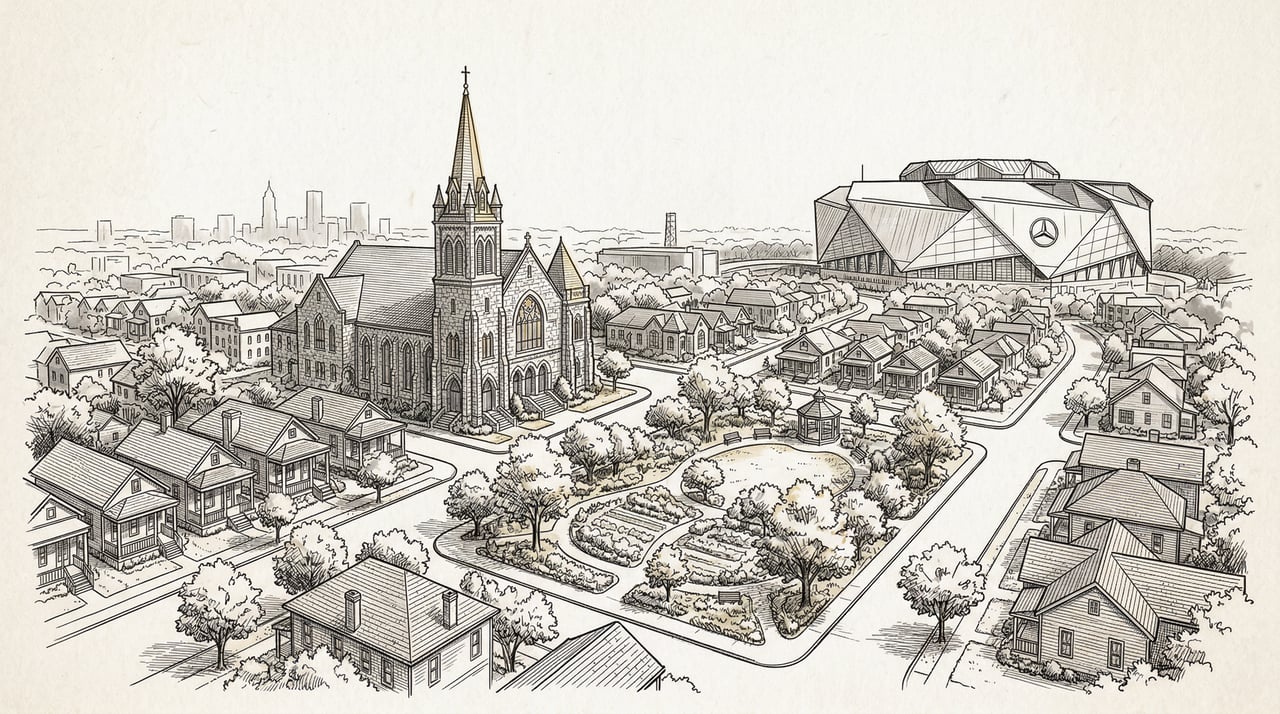
Vine City occupies a significant position in Atlanta’s urban landscape, sitting immediately adjacent to the city’s major sports and entertainment venues while preserving the residential character of Victorian-era streets that have defined this neighborhood for more than a century.
The housing stock features an impressive concentration of Victorian cottages, Queen Anne homes, and Craftsman bungalows representing some of the oldest standing residential architecture in west Atlanta, carrying genuine distinction and a palpable sense of history.
Washington Park anchors the neighborhood’s eastern edge, providing open greenspace and recreational facilities that have served Vine City residents with consistent purpose and well-maintained grounds for well over a century of uninterrupted community use.
The BeltLine Westside Trail connects Vine City to the broader greenway network, giving residents on foot and bicycle direct access to English Avenue, Westside Park, and West Midtown’s growing amenity corridor within a short and scenic ride along the trail.
Life in Vine City moves between two distinct registers the quiet domesticity of its tree-lined residential streets and the ambient energy that arrives near the stadium complex on select evenings and weekend afternoons throughout the year.
On non-event days, the neighborhood reverts to the unhurried rhythm of a residential community where front porch culture remains actively practiced and neighbors move through the blocks with a familiar and comfortable ease born of long acquaintance.
The BeltLine Westside Trail connects residents to the broader west Atlanta lifestyle network, making access to parks, coffee, and West Midtown restaurants a regular routine rather than an occasional and effortful excursion requiring prior planning or a car.
Buyers who appreciate proximity to Atlanta’s largest civic gatherings alongside the genuine privacy of a residential neighborhood find a balance in Vine City that is uncommon, appealing, and increasingly recognized by a wider and more attentive audience of buyers.
Vine City developed in the post-Civil War decades as Atlanta rebuilt and expanded westward, with residential streets platted along a grid that reflected the city’s organized ambitions for scaled and deliberate growth well beyond its original boundaries.
The neighborhood attracted tradespeople, civic leaders, and working families who built Victorian-era homes of genuine architectural ambition, many of which remain standing as the neighborhood’s most distinctive and closely studied landmarks on the interior residential blocks.
By the early twentieth century, Vine City had developed a robust civic identity anchored by churches, fraternal organizations, and community institutions that fostered long-term investment and a lasting culture of neighborhood pride across multiple generations of dedicated residents.
Stadium construction beginning in the 1960s and the eventual development of Mercedes-Benz Stadium transformed the neighborhood’s eastern edge, adding a civic and commercial dimension to an area already shaped by deep historical roots and lasting community investment.
Grocery and market options along Martin Luther King Jr. Drive and the broader west Atlanta corridor cover daily provisions, with West Midtown’s food retail corridor and its specialty grocers accessible within minutes by car or a short, pleasant bicycle ride along the BeltLine Westside Trail.
Octane Coffee’s West Midtown location provides a natural anchor for morning routines, with an espresso-focused menu and a welcoming space that attracts creative professionals and neighborhood residents from across the west side throughout the full length of the week.
A short drive or bicycle ride reaches the boutiques and home goods stores of the Westside Provisions District, where locally owned retail has established a shopping environment built around quality, considered selection, and the genuine pleasure of returning regularly to a curated and evolving space.
Yoga studios, Pilates instructors, and specialized fitness providers have expanded their west Atlanta footprint in recent years, bringing a range of high-quality wellness options within easy reach of Vine City residents who anchor health and movement into their daily and weekly schedules with intention.
What is the overall feel of Vine City?
Vine City carries a deep sense of civic pride and historical weight alongside a palpable sense of forward momentum, as investment in the broader west Atlanta area has brought renewed energy to streets already rich in architectural character and community identity. Residents describe it as a neighborhood with a long memory and a clear, confident future ahead.
What home styles are most common here?
Victorian cottages, Queen Anne homes, and Craftsman bungalows represent the dominant housing styles, with some blocks retaining an exceptionally intact collection of late nineteenth and early twentieth-century residential architecture. New construction has added infill options for buyers who prefer contemporary layouts within a neighborhood of established historic character and genuine civic depth.
What makes Vine City appealing for lifestyle buyers?
The combination of historic architecture, walkability to the stadium district, BeltLine connectivity, and a residential character preserved across more than a century makes Vine City a compelling choice for buyers who prioritize authenticity, location, and long-term civic belonging over the predictability and interchangeability of new-build alternatives elsewhere in the metro.
What does a typical day look like in Vine City?
A morning walk to Washington Park, a ride on the BeltLine Westside Trail toward West Midtown, and an evening dinner at a Westside Provisions District restaurant describes the kind of day Vine City residents construct with natural ease and intention throughout the year. The neighborhood’s proximity to the stadium adds a welcome and different dimension on select evenings.
Is Vine City a strong long-term ownership or investment choice?
Vine City’s position at the intersection of historic residential character, BeltLine greenway access, and stadium-district adjacency creates an ownership case built on multiple durable and complementary foundations. Buyers who have committed to the neighborhood’s long-term potential have found that its civic depth and prime location together reward patience and deliberate stewardship in meaningful and lasting ways.