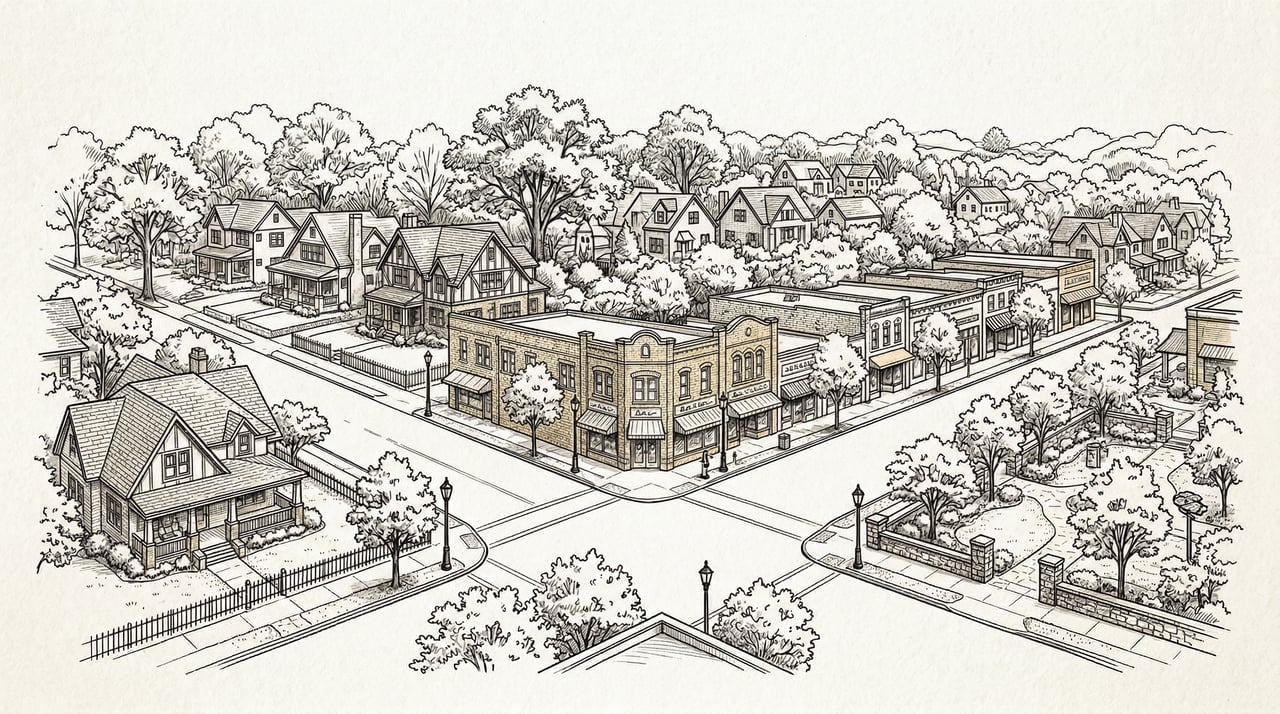
Virginia-Highland takes its name from the intersection of Virginia Avenue and North Highland Avenue, a crossing that has served as the neighborhood's social and commercial anchor since the early twentieth century.
The residential streets branching off North Highland are lined with Craftsman bungalows and Tudor-revival cottages, their front porches and mature tree canopy creating a streetscape that feels genuinely complete rather than in perpetual renovation.
The walkability here is genuine residents reach coffee shops, the Saturday farmers market at John Howell Memorial Park, and more than a dozen dinner destinations without ever getting into a car, a quality that defines the neighborhood as much as its architecture does.
Late evenings on Virginia Avenue quiet quickly once the restaurant terraces clear, leaving a neighborhood that feels calm and private despite its closeness to the activity of North Highland and the broader Eastside beyond.
North Highland Avenue's dining and retail corridor is one of the most-walked stretches in Atlanta, with a mix of restaurants, wine shops, and boutiques catering to a resident clientele that values local ownership and consistent quality.
Murphy's has anchored the corner of Virginia and Highland for decades, with a menu and Sunday brunch service that regulars treat as a non-negotiable part of the weekend rather than a special occasion.
John Howell Memorial Park serves as the neighborhood's primary gathering point on weekend mornings, with dog walkers, picnics, and the farmers market filling the grounds as the summer tree canopy reaches its full and generous cover.
A strong culture of local stewardship runs through the neighborhood's civic life, with resident groups maintaining the streetscapes and commercial character that have kept Virginia-Highland among Atlanta's most sought-after addresses for more than forty years.
Virginia-Highland developed in the early twentieth century as one of Atlanta's first streetcar suburbs, with residential lots platted along the existing grid to serve the expanding professional and middle-class households moving northward from the city's core.
The neighborhood's housing stock reflects the architectural tastes of its development period, with Craftsman bungalows, Tudor revivals, and Colonial-style homes representing the full vocabulary of early twentieth-century residential design found throughout the Eastside.
The commercial blocks along North Highland grew to serve those households, and many of the storefront buildings lining the avenue date to the 1920s and 1930s, their facades maintaining an urban scale that has resisted large-format retail over successive generations.
Preservation efforts organized by neighborhood associations beginning in the 1970s secured the district's architectural character and helped establish Virginia-Highland as one of the city's most intact and admired examples of early suburban urbanism.
Alon's Bakery and the Saturday farmers market at John Howell Memorial Park anchor the neighborhood's food culture, offering fresh bread, seasonal produce, and specialty goods within easy walking distance of most addresses on the residential grid.
The retail along North Highland leans toward the locally owned and carefully curated, with wine shops, gift boutiques, and home goods stores reflecting the tastes of a longtime resident community that has always preferred independent ownership to branded storefronts.
Fitness and wellness options concentrate along the North Highland and Virginia corridors, with yoga studios, Pilates spaces, and independent personal training offering a thoughtful alternative to large-format gyms for residents who value instruction, intimacy, and neighborhood proximity in equal measure.
What is the overall feel of Virginia-Highland?
Virginia-Highland is the kind of neighborhood that people move to once and rarely leave. The combination of genuine walkability, architectural beauty, and a dining scene built around locally owned restaurants creates a daily environment that rewards residents in a way that is difficult to replicate elsewhere in Atlanta.
What home styles are most common here?
The dominant housing type is the Craftsman bungalow, built largely between 1910 and 1940, with front porches, wood floors, and original built-in details that hold their value well and age beautifully under attentive stewardship. Tudor-style cottages and larger Georgian-influenced homes also appear throughout, particularly on the more generous lots along Drewry Street and Barnett Street.
What makes Virginia-Highland appealing for lifestyle buyers?
Virginia-Highland appeals to buyers who want walkable access to restaurants, coffee, and retail without giving up the privacy and residential scale of a neighborhood with deep architectural character and civic pride. The human-scale streetscape, mature tree canopy, and longstanding community identity make it a strong fit for those who want urban convenience paired with genuine neighborhood depth and lasting community investment.
What does a typical day look like in Virginia-Highland?
A morning here might begin at Alon's Bakery before a walk to the farmers market at John Howell Park, with the afternoon spent on a front porch or at one of the coffee shops along North Highland. Evenings often end at a table at Murphy's or Highland Tap, with a walk home through streets lined with old-growth trees and well-tended front gardens.
Is Virginia-Highland a strong long-term ownership or investment choice?
Virginia-Highland has remained one of Atlanta's most consistently desirable addresses across multiple decades, reflecting both the quality of its housing stock and the strength of organized resident stewardship that has protected the neighborhood's character. Long-term ownership here has a strong foundation in a physical environment that resists wholesale change and rewards careful, patient investment over time.