On a recent episode of Inside Georgia Real Estate, host Shelly Winter and Deborah Morton of The Agency Atlanta tackled the question that continues to dominate nearly every housing conversation in Georgia: what happens next?
For Morton, the answer is more measured than dramatic.
After years of sharp swings in rates, pricing, and buyer behavior, she described today’s market as something many consumers have not heard in a while: predictable. Inventory is growing. Pricing is stable. Mortgage rates have moved closer to a level that feels psychologically manageable for buyers. And while uncertainty still exists in the broader economy, Morton said the day-to-day housing picture is far easier to read than it was during the frenzy of the past several years.
That does not mean the market is simple. It means buyers and sellers now have a clearer window for making smart decisions.
Why rates below 6% matter so much
One of the biggest themes from the conversation was the importance of mortgage rates hovering in the high fives.
Morton noted that rates dipping below 6% can have an outsized effect on consumer confidence, even if the real monthly payment difference is not life changing for every buyer. In her view, the number itself carries weight. Buyers who have been sitting on the sidelines often see a rate beginning with a five and suddenly feel that homeownership is back within reach.
That shift matters because affordability is not just about spreadsheets. It is also about perception.
If more buyers re-enter the market at once, demand rises. And if demand rises while inventory is only gradually improving, pricing pressure can return. That is why Morton argued that motivated buyers may be better served by acting before rates fall much further. In a balanced market, there may still be room to negotiate. Once competition heats up again, that advantage can disappear quickly.
Her point was simple: a buyer who waits for the perfect rate may end up paying more for the house itself.
Stable pricing has created a rare opening
Morton described the current market as a kind of middle ground. Sellers are still waiting for the strongest possible offers, but homes are not moving with the same chaos that defined the ultra-competitive years. That creates opportunity for buyers who are prepared and realistic.
It also gives sellers a more dependable environment for planning. When pricing is steady and data is easier to interpret, experienced agents can make stronger predictions about list price, time on market, and likely offer activity. For homeowners trying to decide whether now is the right time to move, that level of clarity can make a major difference.
Rather than chasing headlines, Morton emphasized looking at local inventory, buyer demand, and the specific condition and location of the home. Those factors, she said, make today’s market easier to navigate than many consumers realize.
The fight over data could change how homes are sold
The most forward-looking part of the show centered on technology, AI, and a growing power struggle over real estate data.
Morton explained that residential real estate is in the middle of a battle over control of consumer behavior, listing distribution, and marketplace visibility. At the center of that fight is the MLS system, the regional network that powers how listings are shared with agents and syndicated to major consumer platforms.
If that structure changes, consumers may not feel the impact immediately. But Morton suggested the effects could become much more visible over the next couple of years.
Her concern was not with innovation itself. In fact, she pointed to exciting advances already reshaping the business, including more immersive video, 3D walkthroughs, improved neighborhood presentation, and AI-powered tools that make listings more dynamic and informative.
The real issue, she said, is who owns the system and who benefits most from it.
If large platforms and portal companies gain more control over visibility, the consequences could extend far beyond convenience. Sellers may need to ask more pointed questions about where their homes will actually appear, how much exposure they will receive, and whether their agent has the strategy and budget to compete in a more pay-to-play environment.
In other words, marketing a home may become less automatic and more dependent on the skill of the professional behind it.
Why the right agent matters more than ever
That concern led to one of the clearest takeaways from the show: not all representation is equal.
Morton argued that in the coming years, a good listing agent will need to do far more than place a home in the MLS and wait. Visibility, follow-up, platform strategy, communication, and logistics all matter. She even pointed to old-school basics, like answering the phone and making sure access instructions work, as proof that technology cannot replace competence.
Her message was particularly important for sellers who assume online exposure happens seamlessly. In a changing marketplace, that assumption could become risky. A home’s success may increasingly depend on whether the agent understands both the digital landscape and the on-the-ground work that keeps a transaction moving.
For homeowners who prefer a quieter sale, that challenge can become even more complicated. Morton noted that private or limited-distribution listings may carry trade-offs if platforms begin rewarding broad syndication and penalizing homes that are not pushed everywhere.
That makes strategy critical from the start.
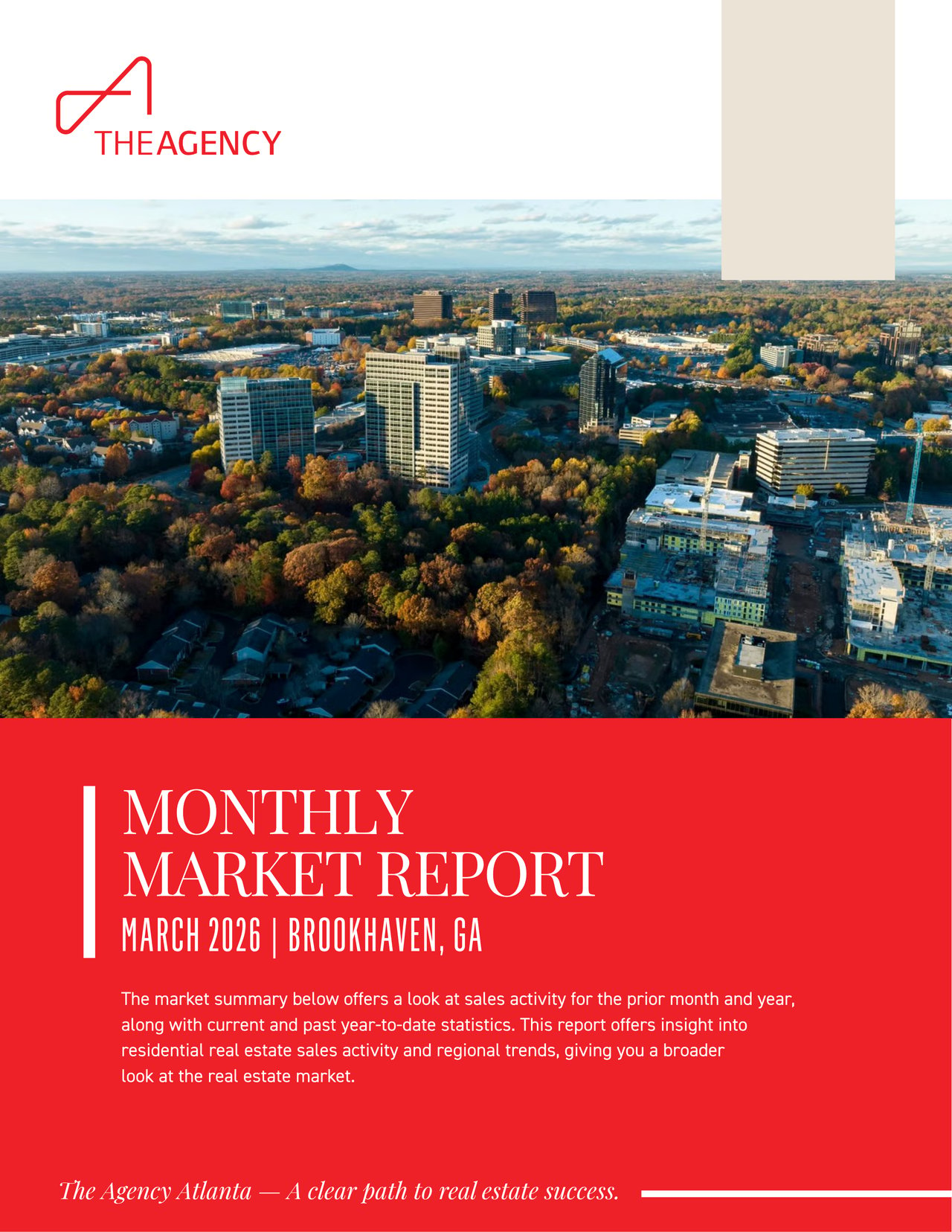
A Brookhaven caller highlighted the importance of “highest and best use”
One of the show’s most practical moments came when a caller from Brookhaven asked about selling an older home that had been updated but might ultimately be seen as a teardown.
Morton’s response underscored how location changes everything.
In some neighborhoods, especially areas where land values have surged, the lot itself may be worth more than the existing structure. In Brookhaven, she explained, a buyer may view an older home not as a finished product but as an opportunity to build something far more valuable. In that case, the seller’s best strategy may not be the same as it would be for a similar house in another suburb or price point.
Her advice was rooted in a concept every seller should understand: highest and best use.
The goal is not simply to list the property. It is to determine what the market values most about that specific parcel, home, and location, then build a strategy around that reality.
Why so many people still want 3% rates back
Another caller raised a question that comes up often: why do consumers continue to expect rates to return to the ultra-low levels seen during the pandemic years?
Morton said the answer is largely psychological.
Once homeowners locked in 3% mortgages, those rates became the benchmark against which every future move is judged. Even when a move would improve quality of life, give a household more functionality, or better align with a new stage of life, many owners struggle to justify exchanging a low-rate payment for a higher-rate loan on a more expensive property.
That reluctance has helped freeze part of the market.
But Morton also emphasized that housing decisions are about more than financing. In many cases, the better question is not whether the new payment is higher. It is whether the move creates enough value in daily life to make sense. Proximity to family, less maintenance, easier layout, and better community fit all matter. Real estate is financial, but it is also personal.
Downsizing is not just about saving money
The show closed with a conversation that many Georgia homeowners are quietly having: when does a large home stop feeling like a win and start feeling like a burden?
As Winter joked about condos and active adult living, Morton pushed back on the idea that these options are only for people who are “old.” She framed them instead as lifestyle choices for homeowners who want less upkeep, fewer stairs, more flexibility, and more freedom to travel.
That shift in framing is important. For many owners, the next move is not about retreating. It is about aligning the home with the life they actually want over the next five to ten years.
A lower-maintenance property, a stepless floor plan, or a community built around convenience and amenities can be just as much a wealth decision as an emotional one. Morton’s broader point was that a home should support the life its owner wants to build, not just store their belongings.
The bigger picture
The most striking idea from this episode was not that the market is booming or collapsing. It was that today’s Georgia real estate market may finally be understandable again.
Rates remain important. Inventory still matters. Technology is changing the rules. And the professional a buyer or seller chooses may matter more in the next few years than it has in a long time.
But for consumers willing to think clearly and plan intentionally, this moment may offer something housing has not provided much of lately: a chance to move with confidence.
For buyers, that could mean acting before competition intensifies.
For sellers, it means understanding exactly how their home should be positioned, marketed, and protected.
And for anyone considering a move, it may be the right time to ask a more meaningful question than “Is this a good market?”
It may be time to ask, “What kind of life do I want my next home to support?”