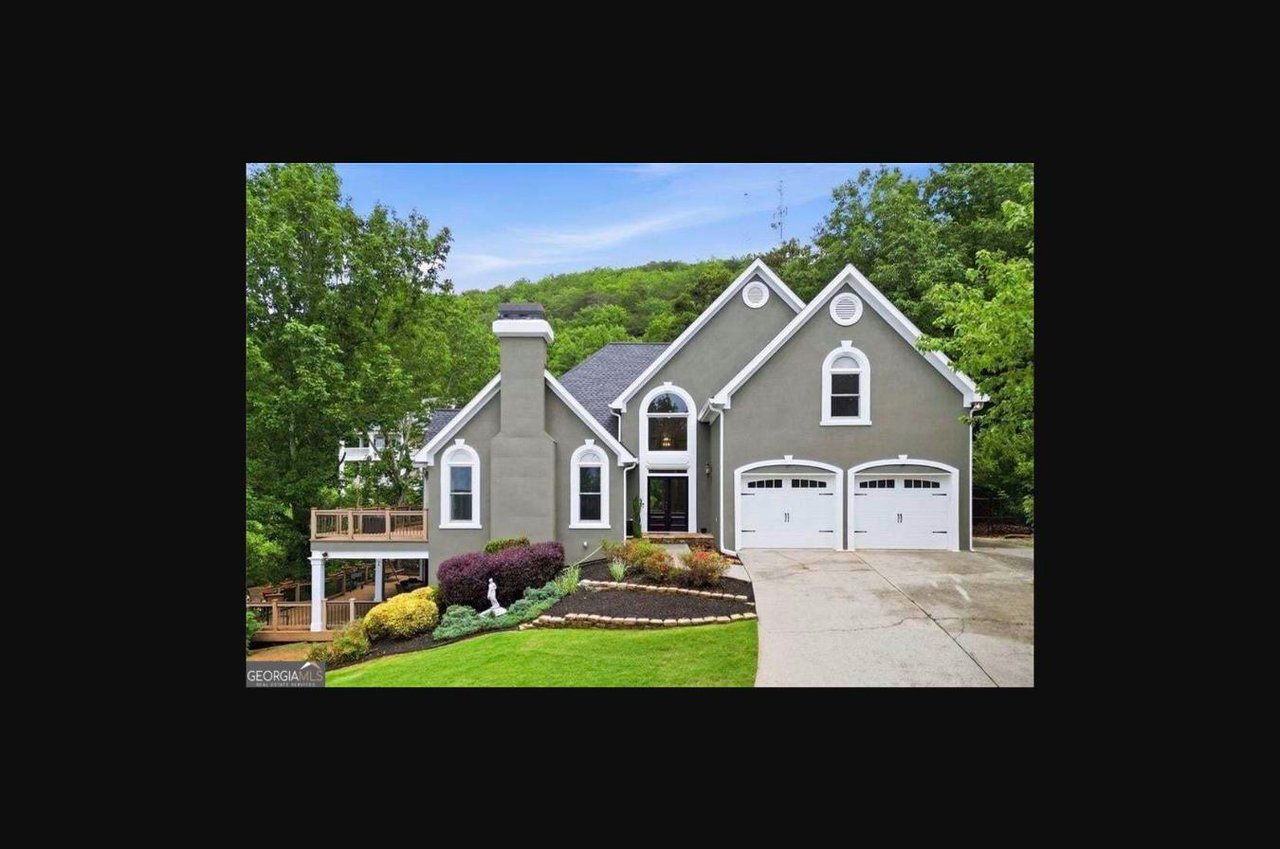
A home near Lake Allatoona can come with a dock, a mowed path to the water and a view across the lake, but none of those come with the deed alone. The shoreline is managed by the U.S. Army Corps of Engineers, and a Lake Allatoona dock permit is a federal authorization issued to a person, not a feature attached to the house. Buyers looking at lake homes along the Bartow, Cherokee and Cobb County shorelines benefit from understanding how that system works before they write an offer. This guide walks through that process step by step.
Who Owns the Shoreline Around Lake Allatoona?
The Corps of Engineers states that it is "responsible for managing the entire shoreline of Allatoona Lake." Its permit instructions ask owners to first confirm that their property borders Corps land, which is why a lakeside lot may end at a government boundary line rather than at the water. The strip between that line and the lake is public land, and private use of it requires Corps permission.
The lake itself dates to the mid-twentieth century. According to the Corps' Mobile District, the project on the Etowah River was authorized in August 1941 and December 1944, impoundment began in December 1949 and full operation followed by January 1950. The Corps lists 270 miles of shoreline and 978 shoreline permits at the lake.
What the Boundary Means Day to Day
On its boundary and encroachment page, the Corps explains that "adjacent landowners are not allowed to alter or place personal property on these lands without a permit" from the Allatoona Lake Project Management Office. Light, portable items such as chairs, grills, coolers and tables may be used on the shoreline for a day at the lake, but the Corps says they "must be removed from public lands at days end." For a buyer, that means the yard you can landscape, fence or build on generally stops at the government line, and anything beyond it follows Corps rules.
How Does Shoreline Allocation Zoning Affect a Dock?
Shoreline at Allatoona is assigned to allocation categories, and the allocation controls what private use is possible. At Allatoona, the Corps describes "Limited Development" as the only zone that allows Shoreline Use Permits. If the shoreline in front of a home is allocated to another category, a new private dock is not available there, regardless of lot size or price.
The federal regulation that governs shoreline management, 36 CFR 327.30, defines the allocation categories. Limited Development Areas are "those areas in which private facilities and/or activities may be allowed." Protected Shoreline Areas are designated "to maintain or restore aesthetic, fish and wildlife, cultural, or other environmental values." The regulation also lists Public Recreation Areas, intended for concessionaire, federal, state or similar public use, and Prohibited Access Areas, where public access is restricted.
Checking the Allocation Map
The Corps publishes Allatoona shoreline allocation maps by county (Bartow, Cherokee and Cobb), with Limited Development shown in green. Its instructions for new permits start here, and a buyer can run the same check before committing to a property marketed for lake access.
Grandfathered Items
Some lakeside homes have older improvements that would not be approved today. The Corps states that items in limited development areas that are not on its current permit list, such as roads or boat ramps, "are only allowed due to grandfathering and can only be maintained." When such an item deteriorates beyond use, the Corps says it must be removed from public lands and waters. A buyer should not assume a grandfathered feature can be rebuilt or expanded.
What Does a Shoreline Use Permit Cover?
A Shoreline Use Permit authorizes specific private uses of Corps land and water in front of a limited development lot. At Allatoona, the Corps lists docks, under brushing, electrical lines, water lines, improved steps or walkways and handrails as items available under these permits. It does not convey ownership of the shoreline.
The federal regulation is explicit on that last point: "The issuance of a private shoreline use permit does not convey any real estate or personal property rights or exclusive use rights to the permit holder." In other words, the permit allows a use; it does not make the shoreline private.
Dock Size Limits
The Allatoona shoreline FAQ sets dock size limits. A simple platform dock "cannot exceed 200 square feet," and a boat slip dock is limited to 800 square feet, measured by the water surface area covered, including all roofed areas and overhangs. The same FAQ states that roofs are not allowed on sundecks, and that adding power or water to a dock requires approval from the Operations Management Office based on location and terrain.
Mowing, Vegetation and Paths
Vegetation on federal land is also regulated. Under 36 CFR 327.30, "some modification of vegetation by private individuals, such as clearing a narrow meandering path to the water, or limited mowing, may be allowed only following the issuance of a permit." The Allatoona office states that it issues permits for uses including under brushing, grass mowing, steps and walkways. A cleared, manicured slope to the water is not automatically something a new owner may continue without the right authorization.
Specified Acts Permits and Shoreline Protection
Some actions fall outside a Shoreline Use Permit. The Corps describes a Specified Acts Permit for special actions such as removing hazardous trees or using a lightweight vehicle or golf cart for dock work or shoreline cleanup. These are "generally issued for a one-time occurrence," and repeat activity requires a new permit. Shoreline protection for erosion control is handled separately, and in limited development zones the Corps notes it is permitted through a no-cost permit, with plans approved before work begins.
Does a Lake Allatoona Dock Permit Transfer to a New Owner?
No. Under 36 CFR 327.30, "Shoreline Use Permits are non-transferable," and they become void upon sale or transfer of the permitted facility. A buyer who wants to keep an existing dock must apply for a permit in their own name. The Allatoona office handles this through a change of ownership process that includes an on-site dock inspection by a park ranger.
The Federal Timeline
The standard permit conditions in the federal regulation set a short window after closing: "The new owner must apply for a Shoreline Use Permit within 14 days or remove the facility and restore the use area within 30 days from the date of ownership transfer." That timeline is a reason to plan the application around closing day rather than after move-in.
The Allatoona Change of Ownership Steps
The Corps' Allatoona Lake change of ownership page tells new owners to contact the Project Management Office at (678) 721-6700 to verify the property has a dock permit and begin the transfer. The office asks for a signed and notarized warranty deed or property deed, the address of the home, the new owner's name, mailing address and phone numbers. A park ranger then schedules an on-site meeting to "inspect the dock for repairs and deviations from current approved plans," and proof of ownership is required at that meeting.
What It Costs, and How Fees Have Moved
The Corps' Allatoona FAQ states that permits last five years, that new permits or ownership transfers cost $400 plus any additional approved land use items for the first five years, and that the cost drops to $175 after that initial permit. Those fees have been debated before. In an August 2019 release, U.S. Representative Barry Loudermilk's office reported that the Corps had notified dock owners on seven Corps-managed Georgia lakes, including Allatoona and Lanier, that new and renewed permits would rise to $835 beginning January 1, 2020, after holding at $400 and $175 since 2006. In October 2019, the same office reported that the increases had been delayed indefinitely. Buyers should confirm the current fee directly with the Corps at the time of purchase.
What Should a Buyer Verify Before Closing?
Before closing on a home near Lake Allatoona, a buyer should confirm four things: where the government property line falls, the allocation of the shoreline in front of the lot, the status of any existing dock permit in the seller's name, and if anything on the shoreline is unpermitted or out of line with approved plans. Each item is easier to resolve during due diligence than after closing.
Georgia contracts typically give buyers a due diligence window to investigate a property, and the steps below fit inside it. Our guide to what happens during the due diligence period in Georgia covers how that window works generally.
A Survey Showing the Government Line
A boundary survey is how a buyer sees where private ownership ends and Corps land begins. It can also reveal improvements that cross the line, such as a patio, shed or fence. Georgia does not require a survey to close, but title coverage typically excludes matters a current survey would show. Our post on needing a survey to close on an Atlanta home explains that tradeoff. For a lake property, the survey is often the clearest document a buyer will have about the shoreline boundary.
Existing Permit Status and Dock Condition
Ask the seller for the current permit and approved dock plans, and confirm the permit with the Project Management Office. Compare what is built on the water to what is approved. Because the ranger inspection during a change of ownership looks for repairs and deviations from approved plans, a buyer benefits from knowing about any differences before closing rather than at that inspection.
Encroachments on Public Land
The Corps defines an encroachment as "un-authorized alteration of land or placement of personal property on public lands." It lists unpermitted roadways, buildings, swimming pools, sheds and fences as major encroachments, and recreational equipment, patio furniture and construction debris as minor ones. According to the Corps, encroachments "generally result in a federal citation" if not removed. The Corps says different sections of the boundary line are inspected every year, so a buyer should confirm the permit status of anything on Corps land rather than assume it was approved.
Docks Inside Lease Areas
Not every private dock at Allatoona is permitted individually. The Corps lists lease areas, including several clubs, marinas and Lake Forrest Country Club, where privately owned docks are managed internally by the lease area. For those docks, the Corps says requests and correspondence go through the lease area. A buyer should confirm which system applies before relying on dock access.
How Is This Different From Owning Lakefront Outright?
Many buyers picture lakefront ownership as a yard that runs to the water with a dock the owner controls. At Allatoona, the shoreline is federal land, private use is allowed only where the allocation permits it, and a dock exists under a five-year, non-transferable permit. The permit holder gets authorization, not ownership or exclusive use.
That distinction shapes how a lake home is evaluated. Two homes with similar square footage and finishes can differ meaningfully if one sits on limited development shoreline with a permitted boat slip dock and the other faces protected shoreline. A market analysis for a lake property should account for the permit, the allocation and the condition of the dock relative to its approved plans. Owners of other Corps lakes in the region face a similar framework, which we touch on in our Lake Lanier second-home buying guide. Questions about deed language, title or contract terms tied to these issues belong with a Georgia real estate attorney.
FAQ
Can I build a new dock on any lot that touches Corps land at Allatoona? No. The Corps states that Shoreline Use Permits can only be obtained in locations allocated as limited development areas. The process starts with the Shoreline Allocation Map and then an on-site meeting with a park ranger. The Corps notes that requests made from May to September could take 3 to 6 weeks before a meeting is scheduled.
Does the seller's dock permit become mine at closing? No. Federal rules state that Shoreline Use Permits are non-transferable. The new owner applies through the Allatoona change of ownership process, which includes submitting a deed and an on-site dock inspection, and the regulation's standard conditions call for that application within 14 days of the ownership transfer.
Can I mow or clear brush between my yard and the water? Only with authorization. The federal regulation states that vegetation modification on Corps land, such as limited mowing or a narrow path to the water, may be allowed only after a permit is issued, and the Allatoona office lists under brushing and grass mowing among the uses it permits.
How long does an Allatoona dock permit last? The Corps' Allatoona FAQ states that permits last five years. New permits or ownership transfers cost $400 plus any additional approved land use items for the first five years, and the cost drops to $175 after that. Confirm the current fee with the Corps at the time of purchase.
Conclusion
Buying near Lake Allatoona means buying a home next to federal land. The deed, the shoreline allocation, the dock permit and the condition of the dock each matter, and the permit itself must be reissued in the buyer's name after closing. Reviewing the allocation map, a current survey, the existing permit and approved plans during due diligence keeps the process orderly. If you are considering a lake home on Allatoona, contact The Agency Atlanta for a conversation about the properties you are weighing and how to plan the purchase.