Metro Atlanta's spring 2026 real estate market is best described in one word: flat. Homes are taking longer to sell, prices are holding steady rather than climbing, and nearly half of all sales contracts nationwide are falling apart before closing. But flat is not the same as falling. Savvy buyers and sellers still have a real path to winning outcomes. On a recent episode of Inside Georgia Real Estate, Deborah Morton, owner and broker of The Agency Atlanta, walked through exactly what is happening, why it matters, and how to position yourself for success. Here is the full playbook.
Market Snapshot: Flat, Not Falling
Despite alarming headlines about looming foreclosures, the data tells a calmer story. The market has simply reset back toward pre-pandemic norms. March 2026 transaction volume was down compared to recent years. Average days on market have stretched to 45 to 60 days. Price appreciation across most Atlanta submarkets is running between 1.5 percent and 4 percent over the last twelve months. The metro Atlanta average sale price is roughly 98 percent of list price, and homeowner equity remains strong. Analysts have compared the current pace to the early 1970s, a slower and more deliberate environment, though without the high-inflation crisis of that era. The bottom line: the sky is not falling, but both buyers and sellers must be more prepared than ever to get results.
Why the Right Agent Matters More Than Ever
In a fast market, almost anything sells. In today's market, strategy is everything. Many anxious sellers are pulling their homes off the market entirely, a new phenomenon that started last year. To stand out, both sides of the transaction need an agent who can do far more than open a door. Sellers need an agent who can price the home accurately from day one, coach them through presentation and staging, execute a serious marketing plan rather than just an MLS entry, and negotiate skillfully through inspection and appraisal. Buyers need an agent who can manage emotions and expectations, navigate complex sale contingencies, structure financing for maximum competitiveness, and spot red flags before they become deal-killers.
Presentation: Where Sellers Have the Most Control
Deborah encourages every seller to walk through their home with a buyer's eyes. Her free Home Report Card, available at insidegeorgiarealestate.com, helps homeowners scrutinize every detail of curb appeal and interior condition. After living in a home for years, sellers often miss what buyers immediately notice. Quick wins that consistently move the needle include power washing the driveway and front porch, trimming shrubs and refreshing mulch beds, repainting or replacing the front door, decluttering and depersonalizing the interior, applying fresh neutral paint to high-traffic walls, and investing in professional photography, drone footage, and a 3D tour. A great agent handles objections before they become objections, often through small fixes that cost far less than a price reduction.
Stacked Sale Contingencies: The New Domino Effect
One of the most striking trends Deborah described is the rise of stacked sale contingencies. Her team is currently navigating a chain of four contingent transactions. Each family is buying a home that depends on selling their own, which in turn depends on a buyer selling their home. Think of dominoes, except every domino has its own inspection report, appraisal, and emotional negotiation. When unexpected issues arise, such as a septic system failing inspection, every party in the chain feels the pressure. A single 3,500 dollar repair dispute can displace four families. Success in this environment requires constant communication among multiple agents and a willingness from all sides to compromise.
Why Nearly Half of Contracts Are Falling Apart
Nationally and here in Georgia, close to 50 percent of sales contracts are collapsing before closing, the highest rate Deborah has seen in her career. The two culprits are almost always financing and condition. On the financing side, buyers discover the true monthly cost of ownership during underwriting once taxes, insurance, HOA dues, and down payment requirements are fully calculated. On the condition side, inspection reports uncover repairs that neither side wants to absorb in an inflationary environment. Sellers feel they already gave at the negotiation table. Buyers feel blindsided by surprise repair costs. The result is fear-based termination, almost always initiated by the buyer, who is the only party with the option to walk away once under contract.
Cash Offer or Refinance? A Listener Question
Ally from Cobb County called in asking whether her mother should accept a cash offer on her home or refinance to pull out equity. Deborah's answer: it depends entirely on the family's goals. If mom is still living in the home and wants to stay, a home equity line of credit or cash-out refinance can free up funds for medical expenses or aging-in-place upgrades like ramps, grab bars, walk-in showers, and stair lifts. These modifications often allow seniors to remain independent for years longer. If, however, the home needs significant updates and the family lacks the time or budget to renovate, a cash offer from a reputable investor can be the smarter path. Yes, you give up some money, but convenience has a cost, and sometimes it is worth paying. Deborah also offered a defense of responsible investors: by renovating tired homes, they create move-in-ready inventory that today's buyers crave.
Not Every Neighborhood Is Flat
While metro Atlanta as a whole is averaging 98 percent of list price, the variation between submarkets is striking. Pockets of Milton, parts of East Cobb, established sections of Buckhead and Brookhaven, and well-rated school districts in Forsyth County continue to see strong demand and occasional bidding wars, with homes closing at 100, 101, even 102 percent of list price with zero seller concessions. Meanwhile, areas with older inventory or lower school ratings may require more aggressive pricing and presentation strategies. School ratings remain a primary driver of demand, but Deborah stressed that strong results are possible in any neighborhood with the right pricing, positioning, and marketing. Her team specializes in identifying the ideal buyer for hard-to-sell homes, whether that is a downsizing retiree eyeing a two-bedroom in a four-bedroom neighborhood, or a first-time buyer drawn to a specific school zone.
Financing Strategies for 2026
Mortgage rates remain a central character in every real estate conversation. While rates have stabilized compared to recent volatility, affordability is still the dominant constraint for many buyers. Deborah encouraged listeners to explore every available financing tool: rate buydowns funded by seller concessions, adjustable-rate products for buyers who plan to move within a defined window, and lender credits that can offset closing costs. For move-up buyers, bridge loans and HELOCs can unlock equity and remove the need for a sale contingency entirely, making offers significantly more competitive. For sellers, understanding buyer financing is equally important. Offering to contribute toward a rate buydown is often more attractive to a buyer than an equivalent price reduction because it lowers their monthly payment immediately. Creative concession structures are frequently the difference between a closed sale and a dead deal.
Community Is a Property Value
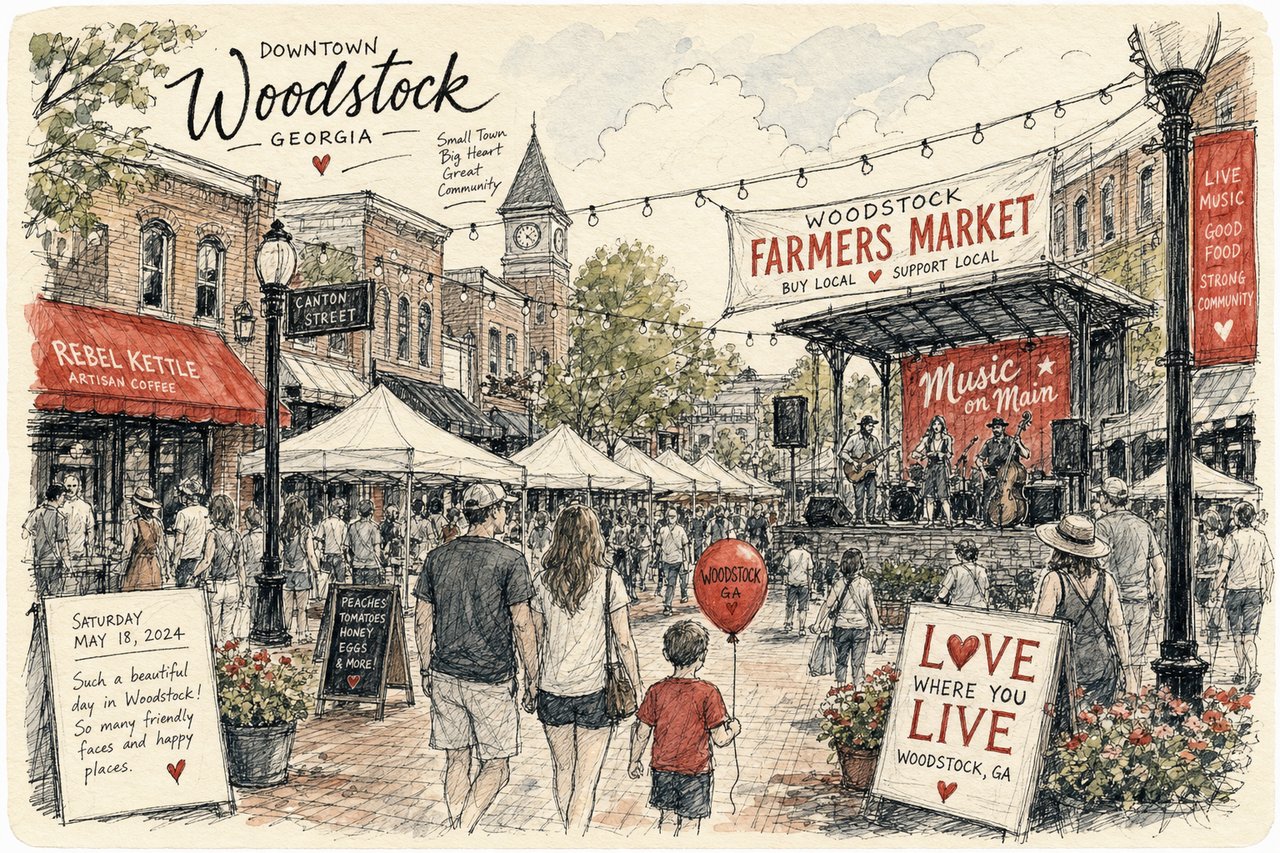
Deborah closed the show with her favorite theme: community. Strong neighborhoods protect property values, and every resident can contribute. She encouraged listeners to meet their neighbors, get involved with local civic associations, and attend local events. She highlighted the upcoming Smoke on the Lake Barbecue Festival, hosted by the North Cobb Rotary at Logan Farm Park in Acworth on May 8th and 9th, a free community concert with great food whose proceeds are reinvested locally. Other Atlanta favorites include the Taste of Mableton, the Taste of Marietta, the Dogwood Festival, and countless neighborhood block parties. Whether you live in a single-family neighborhood, a townhome community, or a high-rise condo, getting to know your neighbors and supporting local events is one of the most underrated investments you can make in your property.
Atlanta Market Outlook: What to Watch Next
Looking ahead through the rest of 2026, expect continued moderate appreciation, steady inventory growth, and ongoing innovation in financing structures as buyers and sellers adapt. Watch for builder incentives in new construction townhome communities priced between 300,000 and 450,000 dollars, where demand remains strong from both first-time buyers and downsizing retirees. Keep an eye on school district trends, which continue to influence pricing power in neighborhoods across Forsyth, Cobb, North Fulton, and Cherokee counties. Most importantly, do not let national headlines dictate your local strategy. Atlanta is a collection of micro-markets, and the right professional team will help you read your specific neighborhood, your specific street, and your specific price band with clarity and confidence.
Final Thoughts and How to Connect
Whether you are buying, selling, refinancing, or simply trying to understand the changing landscape, the message from this episode is clear. Preparation, presentation, and the right professional guidance will determine your success in this market. Hire a solution-driven agent. Price strategically. Present your home thoughtfully. Stay flexible at the negotiation table. And remember that a flat market is not a bad market, it is a market that rewards skill. For questions, the free Home Report Card, or to connect with Deborah Morton and The Agency Atlanta team, visit insidegeorgiarealestate.com or call 404-872-0750. Tune in to Inside Georgia Real Estate every Saturday at 1:07 PM on WSB for the latest insights from one of metro Atlanta's most trusted brokers.