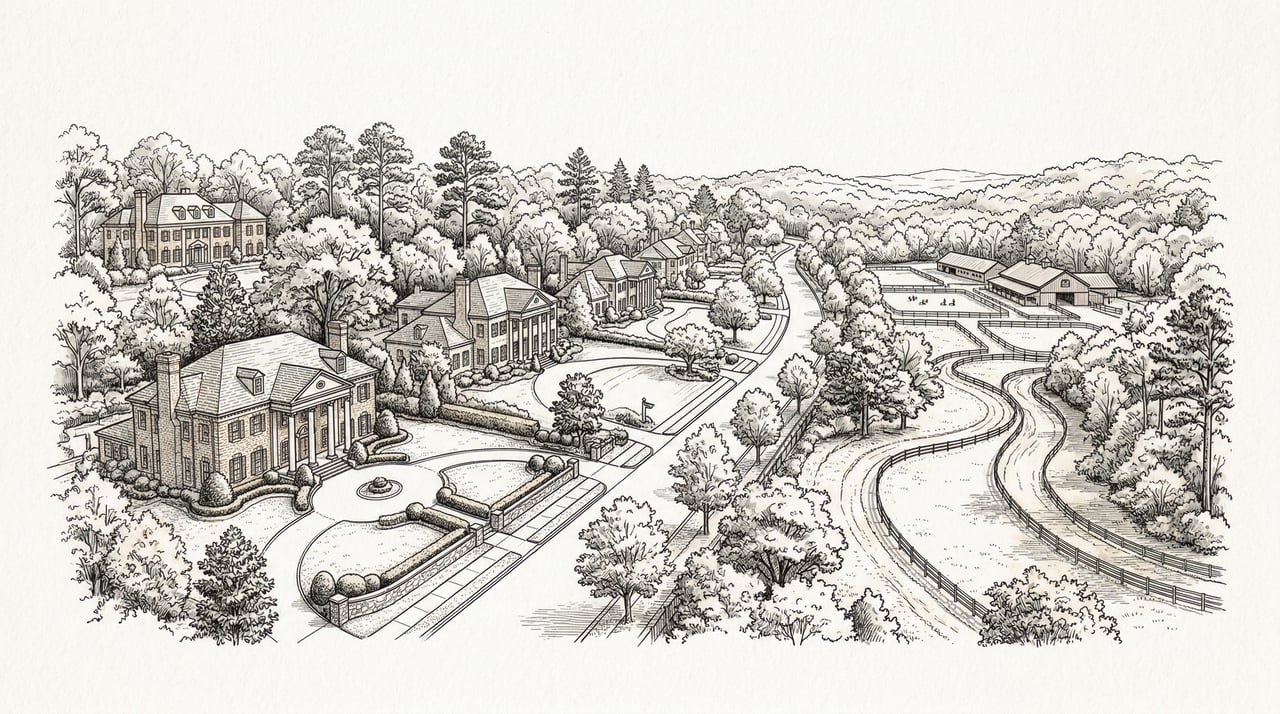
Decatur's missing middle housing debate has become one of the defining local policy conversations for anyone who owns property or is considering buying in this small but influential DeKalb County city. "Missing middle" housing refers to duplexes, triplexes, quadplexes, and small multifamily buildings that sit between single-family homes and larger apartment complexes, a housing type largely absent from most zoning codes for decades. Decatur's efforts to allow more of this housing type in traditionally single-family zones carries real implications for property values, renovation options, and neighborhood character.
What Missing Middle Housing Actually Means
The term describes a category of housing that was common in American cities before mid-20th-century zoning codes restricted most residential land to single-family use only. Duplexes, triplexes, and small-scale multifamily buildings offer a middle density option, more housing per lot than a single-family home, but far less than a large apartment building, and proponents argue this housing type can improve affordability and housing supply without dramatically changing a neighborhood's physical scale.
Decatur, like many desirable but land-constrained cities, has limited room for large-scale new development, which is part of why missing middle zoning reform has become an active policy lever for addressing housing supply and affordability concerns within existing neighborhoods.
What's Changed and What Hasn't
Zoning reform of this kind typically proceeds through specific code amendments rather than a single sweeping change, and the details of which zones allow which housing types, and under what conditions, matter enormously for any individual property. Confirm the current zoning classification for your specific parcel and what it permits today, since reform efforts can apply unevenly across different zoning districts within the same city, and proposed changes are not the same as adopted ones.
Homeowners and buyers should treat any zoning reform news with the same diligence they'd apply to a proposed rezoning near a specific property: read the actual adopted code language, not just news coverage, and confirm with city planning staff what your specific parcel is currently permitted to do.
What This Means for Current Homeowners
For owners of single-family homes in zones newly permitting duplex or triplex use, this kind of reform can meaningfully increase a property's development potential and, by extension, its value to a builder or investor evaluating a teardown-rebuild as a duplex or triplex. This is a genuine consideration if you're evaluating a sale, since your property may be worth more to a buyer planning a multi-unit rebuild than to a buyer wanting a single-family home.
It's also worth understanding how missing middle zoning could affect your own renovation or expansion plans. Some homeowners are exploring adding an accessory unit or converting part of an existing home into a legal second unit, which can generate rental income while keeping the primary structure largely intact, though this requires careful review of current code requirements around parking, setbacks, and unit size.
What This Means for Buyers
Buyers should factor a property's zoning-permitted density into their evaluation, not just its current use as a single-family home. A lot zoned to permit a duplex or triplex may command a different price than a comparable lot restricted to single-family use only, particularly from investor and builder buyers who are evaluating the property's redevelopment potential rather than its current condition.
If you're specifically looking for a traditional single-family neighborhood feel, it's worth understanding how much missing middle development has already occurred or is likely to occur on your target street, since a neighborhood in the early stages of this transition may look different in five or ten years than it does today.
The Affordability Argument, and Its Limits
Proponents of missing middle zoning argue it can help address housing affordability by increasing the overall supply of units without requiring large multifamily development, which is often harder to site in already-built-out neighborhoods. Critics argue that new duplexes and triplexes in a desirable city like Decatur often get built and priced at a premium rather than functioning as genuinely affordable housing, since land and construction costs in Decatur are high regardless of unit count.
Both perspectives contain some truth. Missing middle zoning is unlikely to single-handedly solve affordability challenges in a high-demand market like Decatur, but it does expand the range of housing types available, which can matter for buyers who want a smaller footprint or a lower price point than the typical single-family home in the city.
How to Evaluate a Property in Light of This Debate
Ask your agent for a copy of your target property's current zoning designation and a summary of what it permits today, not what reform advocates hope it will permit in the future. If missing middle provisions have already been adopted for the applicable zone, ask what specific requirements apply, such as lot size minimums, parking requirements, and maximum unit counts, since these details determine whether a redevelopment scenario is actually feasible on a given lot.
If you're buying specifically for the redevelopment potential, get a preliminary read from an architect or builder on what's actually buildable on the lot given current setback and lot coverage rules, rather than relying on zoning designation alone. Zoning permits certain uses, but site-specific constraints like tree preservation rules, stormwater requirements, and easements can significantly limit what's practically achievable.
Frequently Asked Questions
What is missing middle housing? It refers to duplexes, triplexes, quadplexes, and small multifamily buildings that offer housing density between single-family homes and large apartment complexes.
Has Decatur adopted missing middle zoning citywide? Reform efforts typically apply to specific zoning districts rather than the entire city at once. Confirm the current status for your specific parcel with city planning staff rather than assuming citywide application.
Will missing middle zoning increase my property's value? It can, particularly if your lot becomes newly eligible for duplex or triplex development, since that expands the pool of potential buyers to include builders and investors evaluating redevelopment.
Should I worry about my neighborhood's character changing? That depends on how much missing middle development actually occurs on your specific street. Reform creates the zoning possibility, but actual construction depends on market demand and individual property owner decisions.
Conclusion
Decatur's missing middle housing debate is reshaping the range of options available to both current owners and prospective buyers, but the details matter far more than the general policy direction. Confirm your specific parcel's zoning status, understand what's actually adopted versus proposed, and evaluate any property's redevelopment potential with professional input rather than general assumptions.
If you're evaluating a property in Decatur and want a clear picture of its zoning status and development potential, contact The Agency Atlanta. We track this policy area closely and can help you understand what it means for your specific situation.